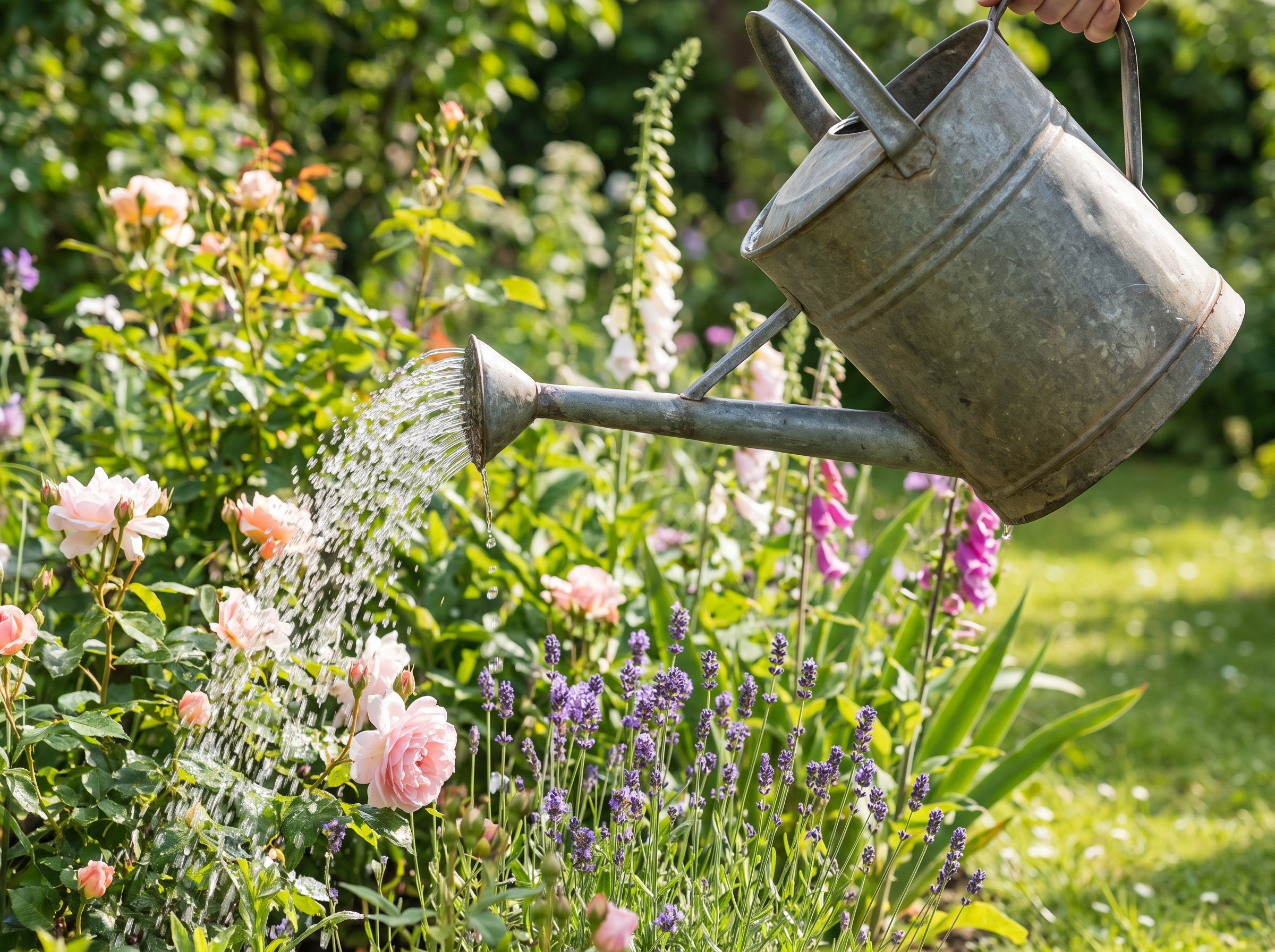
More garden plants are lost to overwatering than to drought — knowing when and how to water matters more than how often.
Check the Soil, Not the Calendar
Rather than watering on a fixed schedule, push a finger about two inches into the soil near the base of the plant. If it's dry at that depth, it's time to water; if it's still moist, wait a day or two and check again. This single habit prevents most of the overwatering that rots roots and invites fungal disease.
Water the Soil, Not the Leaves
Wet foliage, especially overnight, is one of the most common triggers for powdery mildew and other fungal problems. Aim water at the base of the plant instead, and if overhead watering is unavoidable, do it in the morning so leaves dry out well before evening.
Time It for the Cool Hours
Early morning is the best time to water — less is lost to evaporation than watering under a hot midday sun, and plants have all day to dry off before nightfall. Evening watering works too, but leaves less time for foliage to dry, raising the risk of fungal issues.
A layer of mulch around plants slows evaporation significantly, often cutting how often you need to water in half.
Container Plants Dry Out Faster
Pots and containers lose moisture much faster than in-ground beds, especially in warm weather, and often need daily attention during summer. A pot that feels lightweight when lifted is usually a sign it needs water.