A vegetable garden turns a patch of yard into a source of fresh, homegrown food, and even a modest raised bed can produce a surprising amount over a single growing season.
Vegetable crops generally split into cool-season types (lettuce, peas, broccoli) that thrive in spring and fall, and warm-season types (tomatoes, peppers, squash) that need summer heat — planning around both extends the harvest across most of the year.
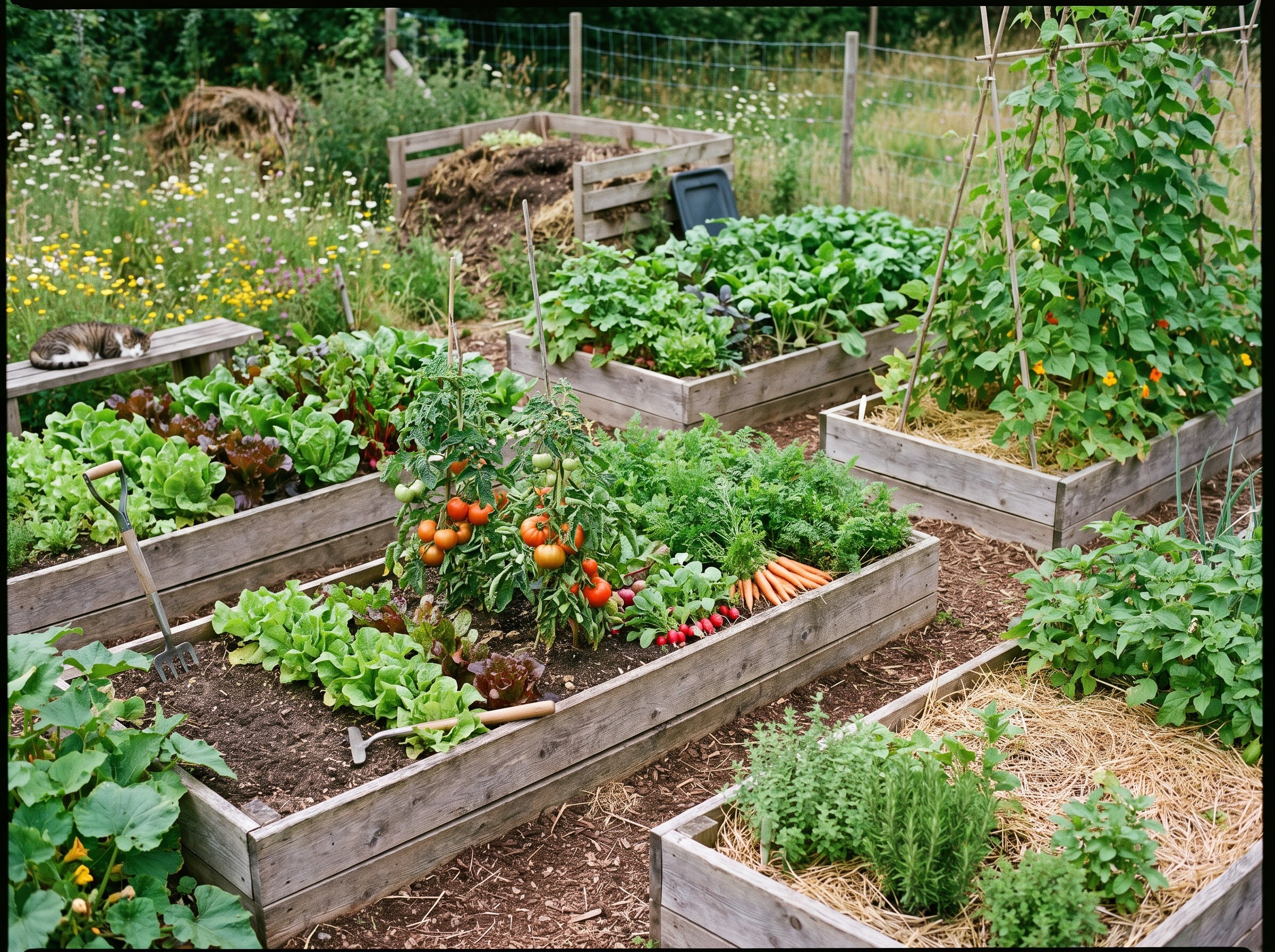
Most vegetables want at least six to eight hours of direct sun and rich, well-draining soil amended with compost. Starting small with a few reliable, easy crops — like lettuce, beans, and zucchini — builds confidence before tackling more demanding vegetables.
Rotating which family of vegetables grows in a given spot each year — rather than replanting the same crop in the same soil — helps prevent the buildup of pests and diseases specific to that plant family.