
True Lilies vs. "Borrowed" Lilies
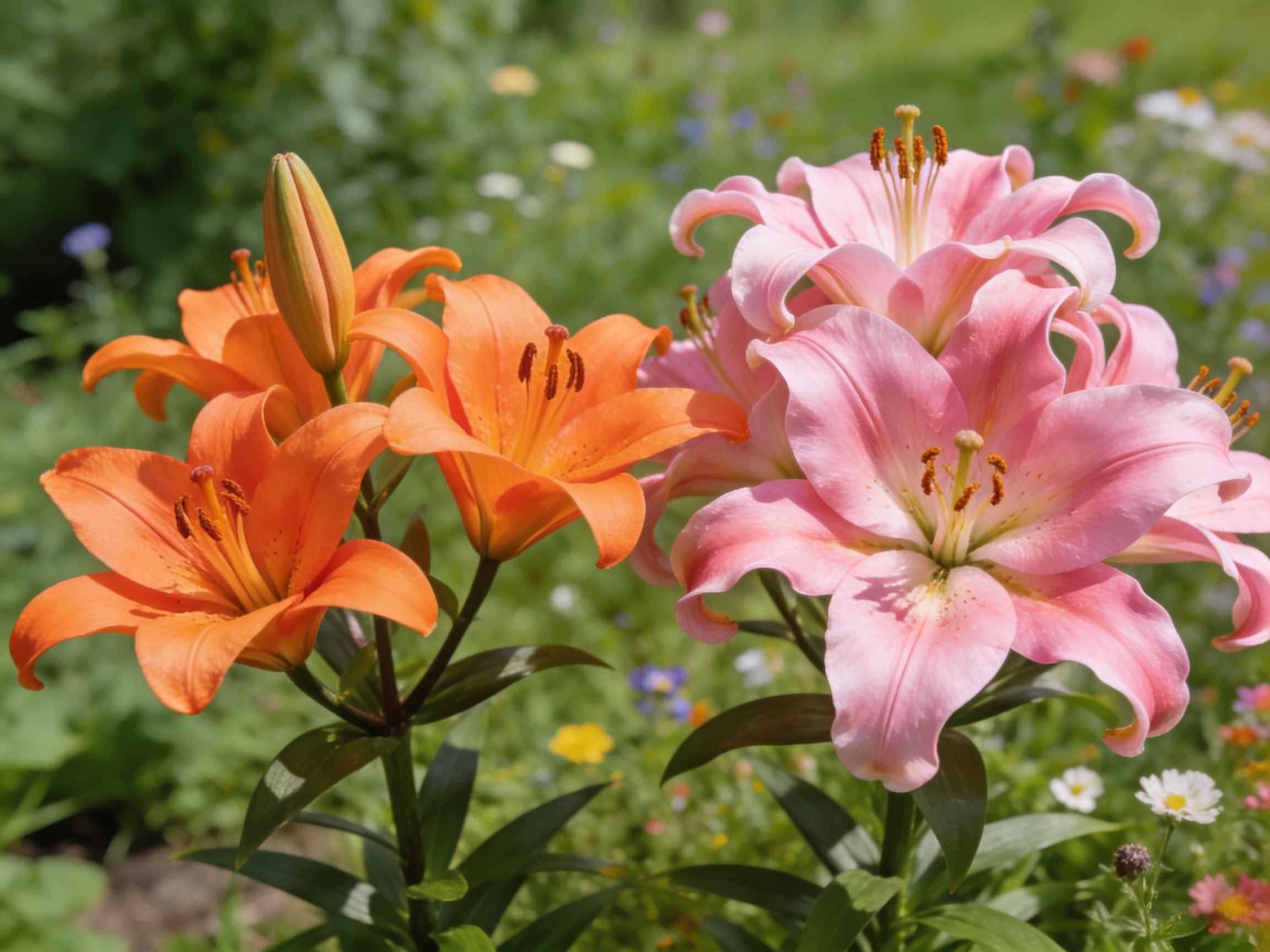
Not every flower with "lily" in its name is a true lily — the real ones all belong to the genus Lilium, and split into two well-known camps.
Asiatic and Oriental
Asiatic lilies bloom first, in May or June, in bold, unmistakable colors — red, yellow, orange, purple — on plants running 3 to 4 feet, usually without fragrance, and they multiply readily. Oriental lilies bloom later, in July or September, standing 5 to 6 feet with larger, more fragrant, more delicately textured blooms in softer colors, though they don't propagate as easily as Asiatics. Tiger lilies resemble Asiatics but carry distinctive spots and can silently carry lily virus. True lilies also include species and miniature "pixie" types that fall outside the two main groups.
The Imposters
Daylilies, calla lilies, canna lilies, toad lilies, plantain lilies (hosta), and sword lilies (gladiolus) all borrow the "lily" name but belong to entirely different genera — none of them are true Lilium. Whichever kind you're growing, deadhead spent blooms and any seed pods that form, but never cut back the green flower stem until it browns on its own — it's still photosynthesizing to recharge the bulb for next year.
Holes in lily leaves are usually slugs — apply slug bait as soon as new shoots poke above ground in spring, repeating every few weeks until the plants are established.