Sedum, commonly called stonecrop, is a large genus of succulent perennials prized for their thick, water-storing leaves and late-season clusters of star-shaped flowers that draw bees and butterflies right up through the first frosts.
From ground-hugging creepers used between pavers to upright border varieties like "Autumn Joy," sedums are workhorses of low-water gardens — thriving in poor, rocky soil where many other perennials struggle.
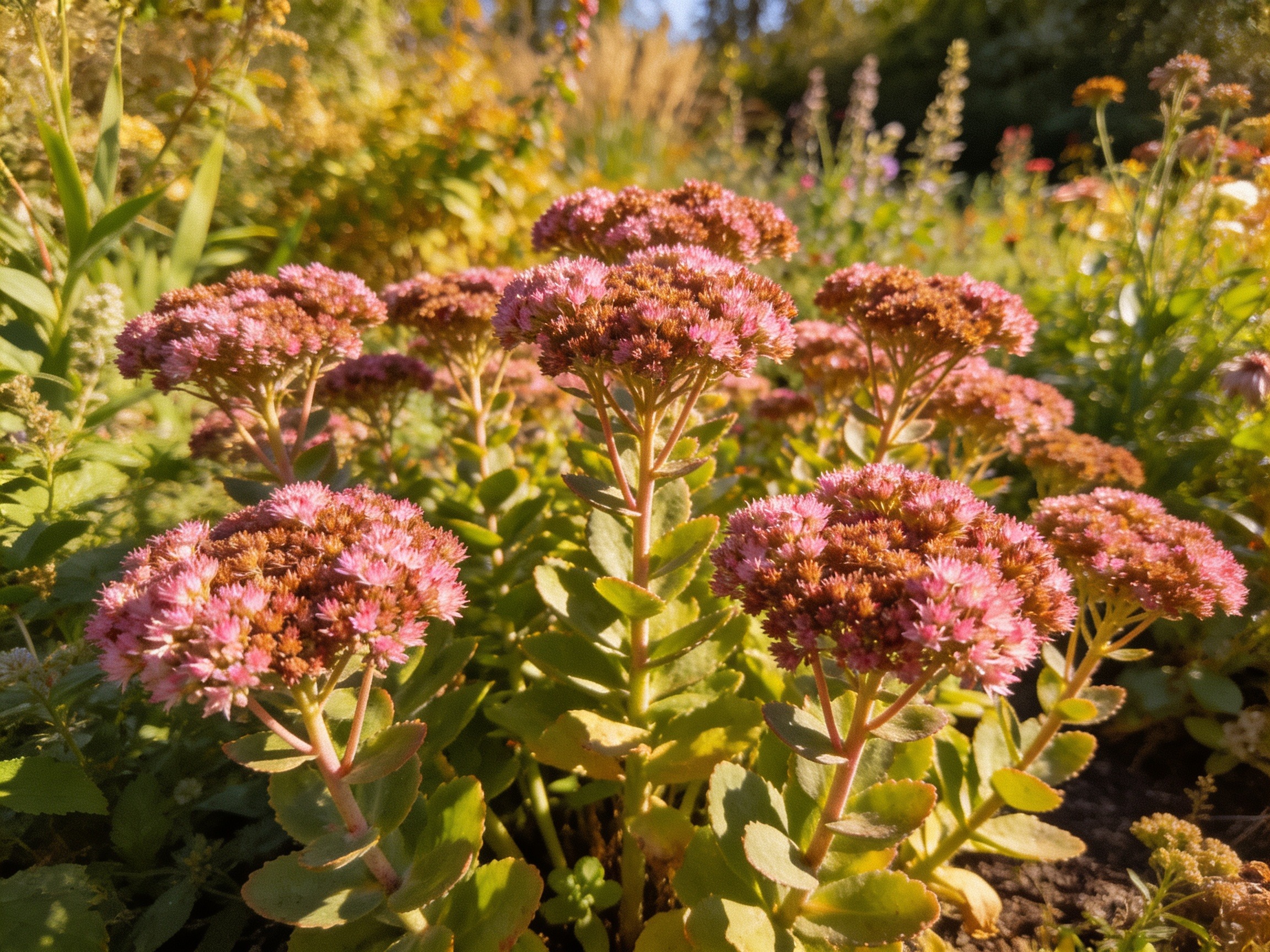
Sedum symbolizes tranquility and enduring love — its old folk name "Live Forever" comes from its remarkable ability to keep growing even after being uprooted, making it a traditional gift meant to represent lasting affection.
Sedum wants full sun and, above all, sharp drainage — soggy soil is its one real enemy. Plant in average to poor soil and resist the urge to fertilize or water heavily; lean conditions keep stems sturdy and upright rather than floppy. Divide clumps every three to four years in spring to keep plants vigorous, and leave the dried flower heads standing through winter for texture and seed-eating birds.
Several Sedum species, particularly Sedum acre, have a folk history of topical use for minor burns and skin irritation thanks to the cooling, moisture-rich gel inside their leaves, similar in tradition to aloe vera.