Rudbeckia, the genus behind black-eyed Susan, includes a range of golden, daisy-like species that reliably fill sunny beds and prairies with color from midsummer into fall.
Native to North America, Rudbeckia is prized for its toughness, tolerating heat, drought, and poor soil with ease. Taller varieties like the coneflower-adjacent Rudbeckia laciniata add height to a border, while shorter types work well massed in a bed for maximum impact.
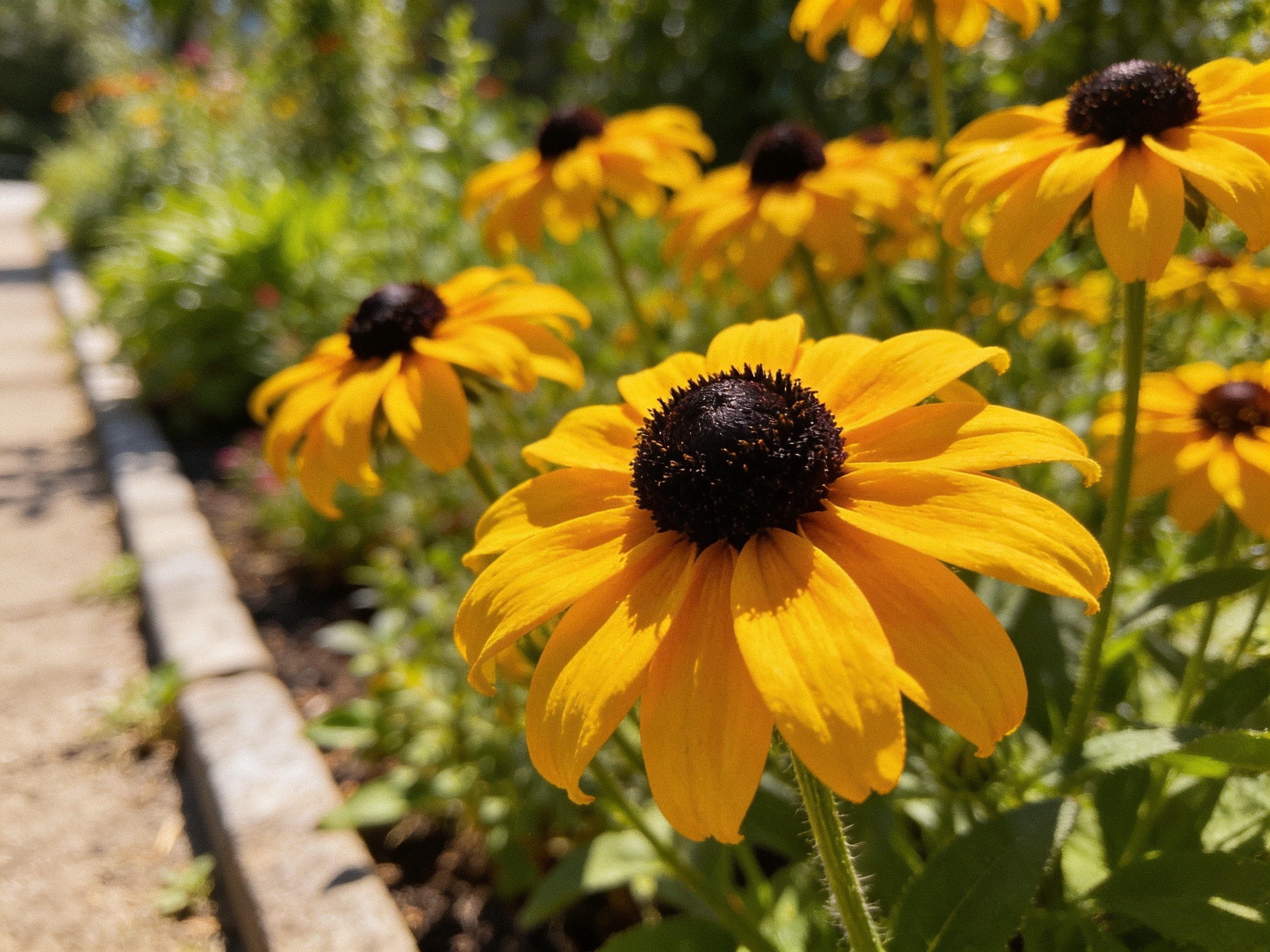
Rudbeckia symbolizes justice and encouragement, sharing much of its symbolic meaning with its most famous member, the black-eyed Susan, a beloved emblem of American prairies.
Rudbeckia wants full sun and tolerates poor, dry soil with ease, making it an excellent low-maintenance choice for a native or pollinator bed. Deadheading extends bloom time, and leaving some seed heads standing through winter provides food for finches and other birds.
Some Native American traditions used Rudbeckia preparations for colds and minor wounds, though today the genus is grown almost exclusively as a native pollinator and cut flower garden ornamental.