Rose Garden Diseases
A cold winter leaves roses more frail — not necessarily infected outright, but weaker and more vulnerable when warm, humid weather returns and fungal disease finds an opening.
What to Watch For
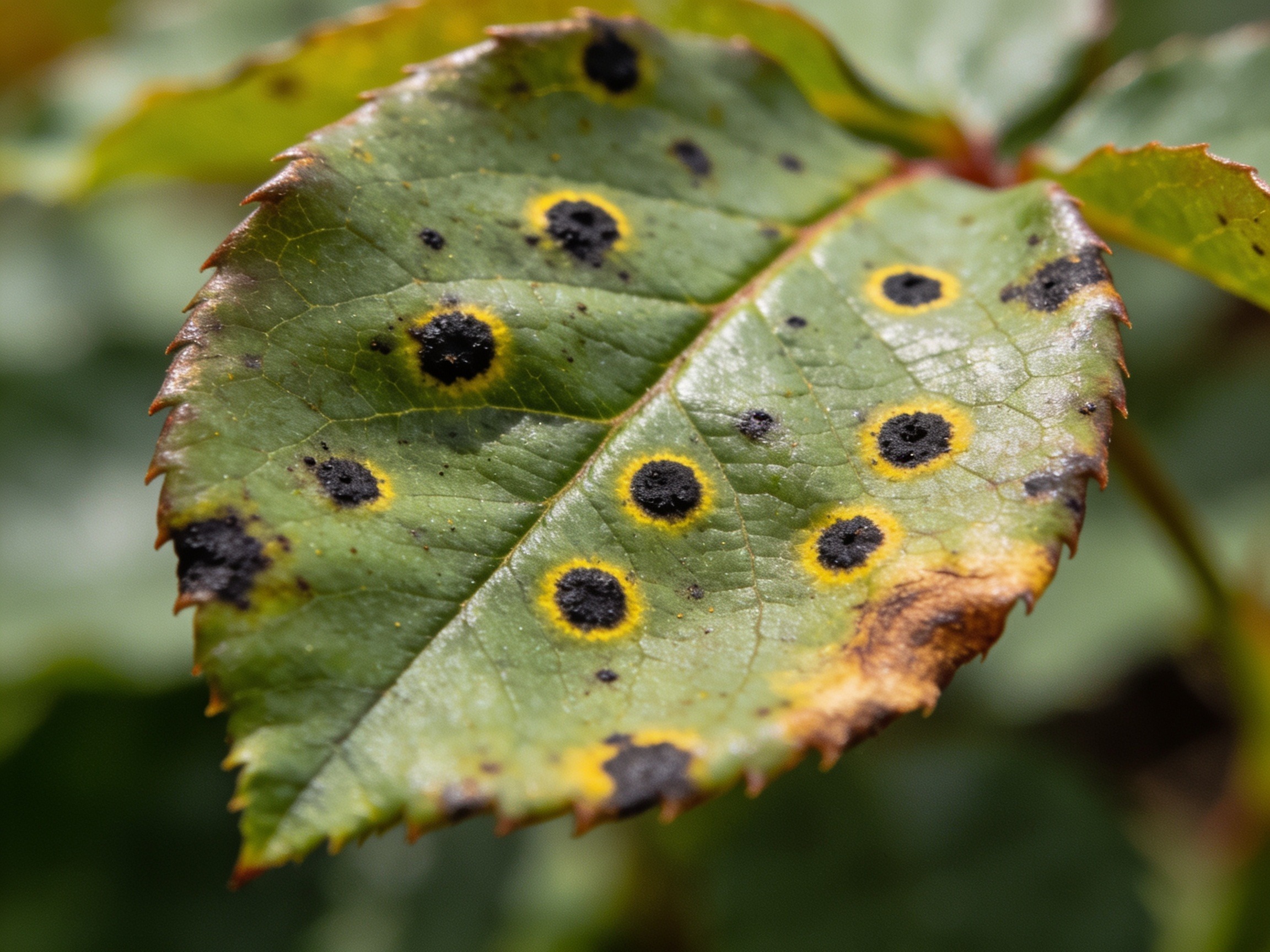
Powdery mildew shows up as a white dust along stems and both sides of leaves — left unchecked, affected leaves drop and the rose never fully matures that season. Rust looks just like its name, appearing on leaf undersides and spreading quickly if not addressed. Black spot presents as circular dark marks, roughly 1/16 to ½ inch across, on the leaves; hybrid tea roses resist it well, but many other varieties don't. Rose mosaic is different from the others — a virus rather than a fungus, showing mottled green-and-yellow discoloration, and the only real fix is removing the infected plant and all its clippings entirely.
Prevention
Water the soil around a rose rather than the plant itself, and clear fallen leaves regularly rather than letting them accumulate underneath. Snip off any affected blooms immediately and discard them away from the bed. Regular pruning, well-fed plants, and — where possible — choosing disease-resistant varieties from the start all reduce the odds of a serious outbreak taking hold.
Seal fresh pruning cuts with a safe glue — it's a simple extra step that keeps fungal spores from entering the plant through an open wound.