Rhubarb returns each spring from the same crown for a decade or more, sending up thick, tart stalks well before most other edible crops have even woken up for the season.
Grown for its edible stalks rather than the toxic leaves, rhubarb thrives in cold-winter climates that give it the dormancy it needs, and a single well-established plant can provide a reliable spring harvest for many years.
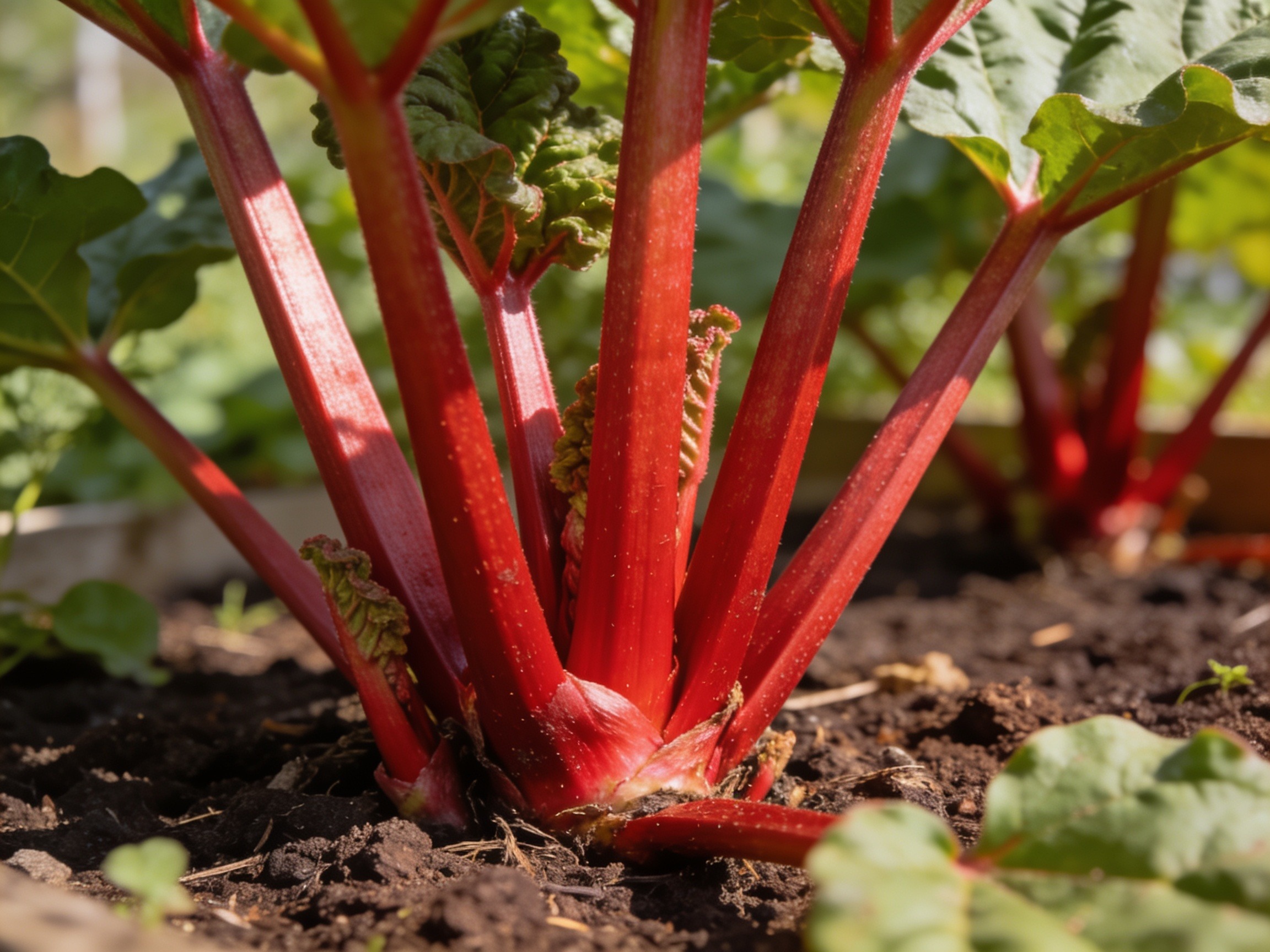
Rhubarb wants rich, well-draining soil and benefits from a cold winter dormancy, making it a poor fit for very warm, frost-free climates. Avoid harvesting heavily in the first year or two after planting, giving the crown time to fully establish before a full harvest.
Rhubarb leaves contain high levels of oxalic acid and are toxic if eaten — only the stalks are edible, and leaves should always be trimmed off and discarded, never composted with edible scraps.