Rhododendron produces enormous, rounded flower trusses atop lush evergreen foliage, giving a dramatic, established presence to a shaded garden well beyond its spring bloom period.
Native across Asia, Europe, and North America, rhododendron is closely related to azalea, and both belong to the same genus, though rhododendrons are typically larger with bigger, evergreen leaves. Some species are state flowers, prized for their impressive floral display each spring.
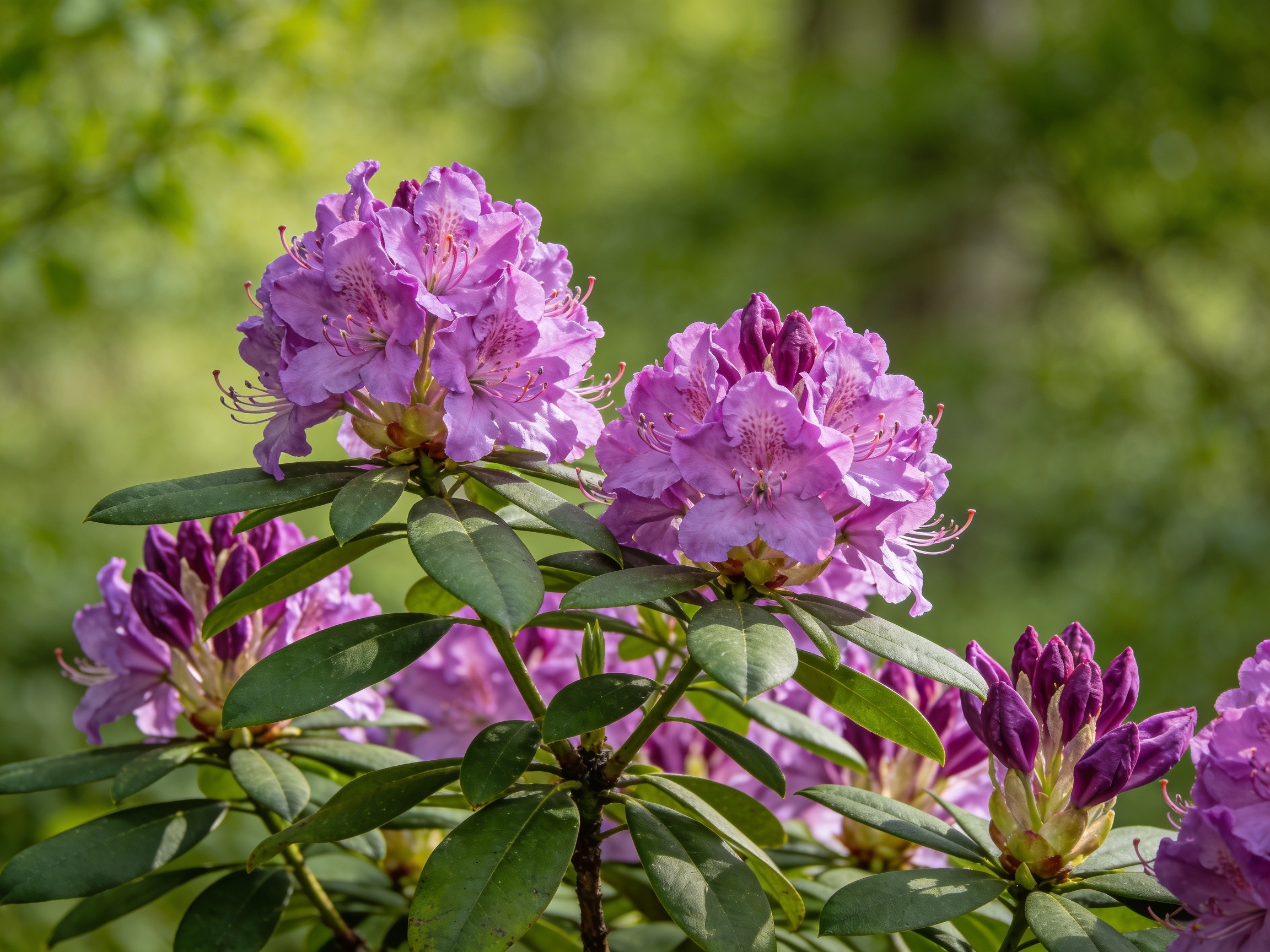
Rhododendron symbolizes caution and danger alongside beauty, a dual meaning likely rooted in the plant's toxicity, though it's also widely admired simply for its abundant, showy spring blooms.
Rhododendron needs acidic, well-draining soil and partial shade, since intense sun and alkaline soil are the two most common reasons it struggles. A generous layer of mulch helps maintain the consistent moisture and cool root zone this shrub depends on for healthy growth.
Rhododendron contains toxic compounds and has no history of safe culinary or herbal use — even its nectar can produce a toxic "mad honey" when processed by bees, so it should be grown strictly as an ornamental.