
Removing Thorns From Roses
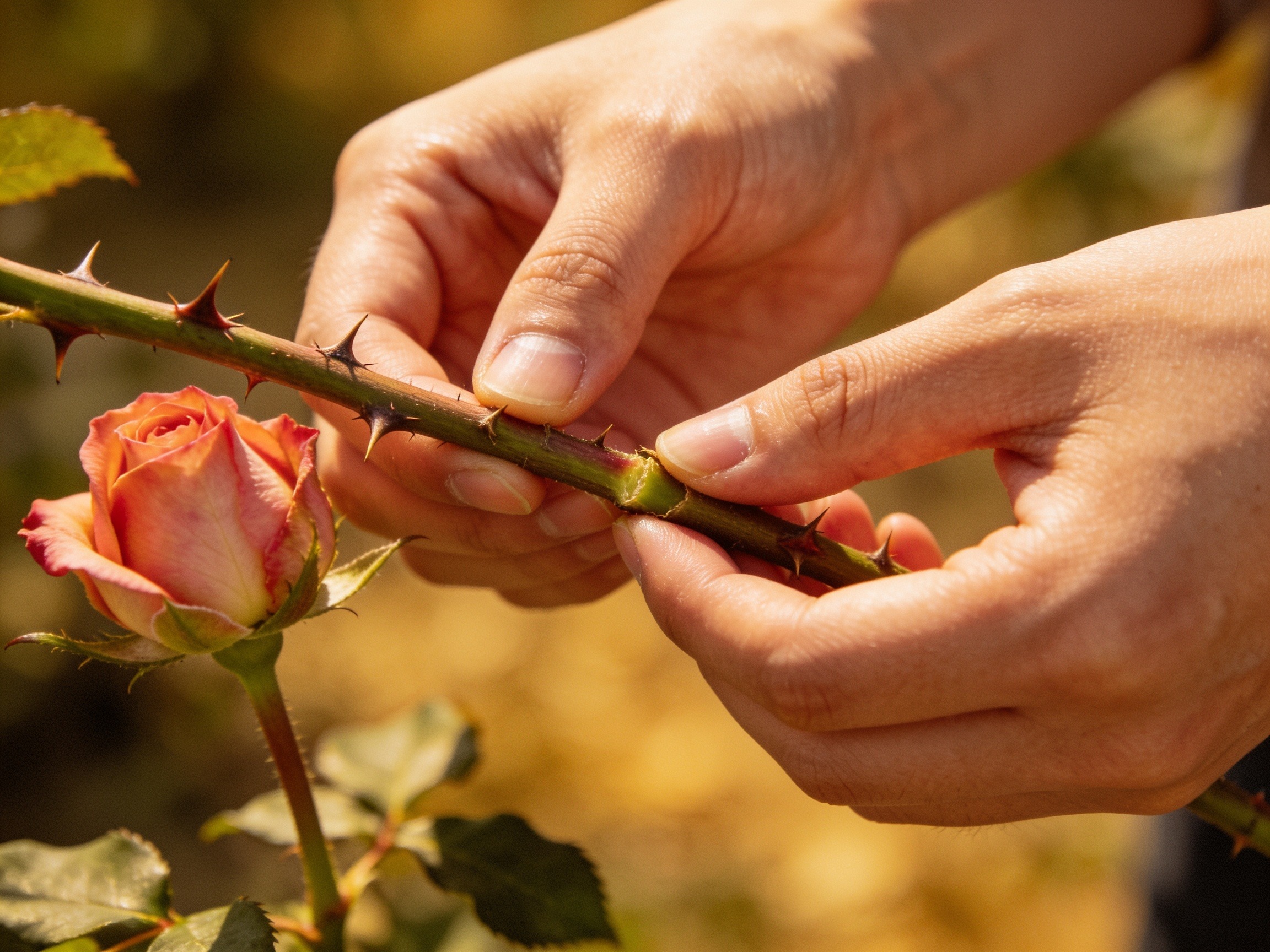
Thorns help a rose absorb water, so removing them isn't harmless housekeeping — done carelessly, it can genuinely shorten a stem's life. A little patience makes all the difference.
Doing It Without Damage
Torn or peeled stem skin interferes with the plant's ability to move water up to the petals, so rushing the job usually costs you the stem's vase life. If you're growing roses to harvest later, it's best to remove thorns before the plant matures and flowers. The simplest method is squeezing each thorn from both sides until it pops off cleanly; for especially thorny varieties, a dedicated dethorning tool from a garden center makes the job easier and safer — just use light, even pressure so the thorn releases without tearing the stem.
How Much to Remove
Consider the end use before you dethorn at all. Roses meant as a bouquet gift are worth fully dethorning so no one gets pricked handling them. For roses simply going into a vase at home, it's enough to remove only the thorns that will sit below the waterline, leaving the rest of the stem untouched.
If a thorn won't release with gentle pressure, stop rather than forcing it — that resistance usually means you're about to tear the stem's skin rather than pop the thorn free cleanly.