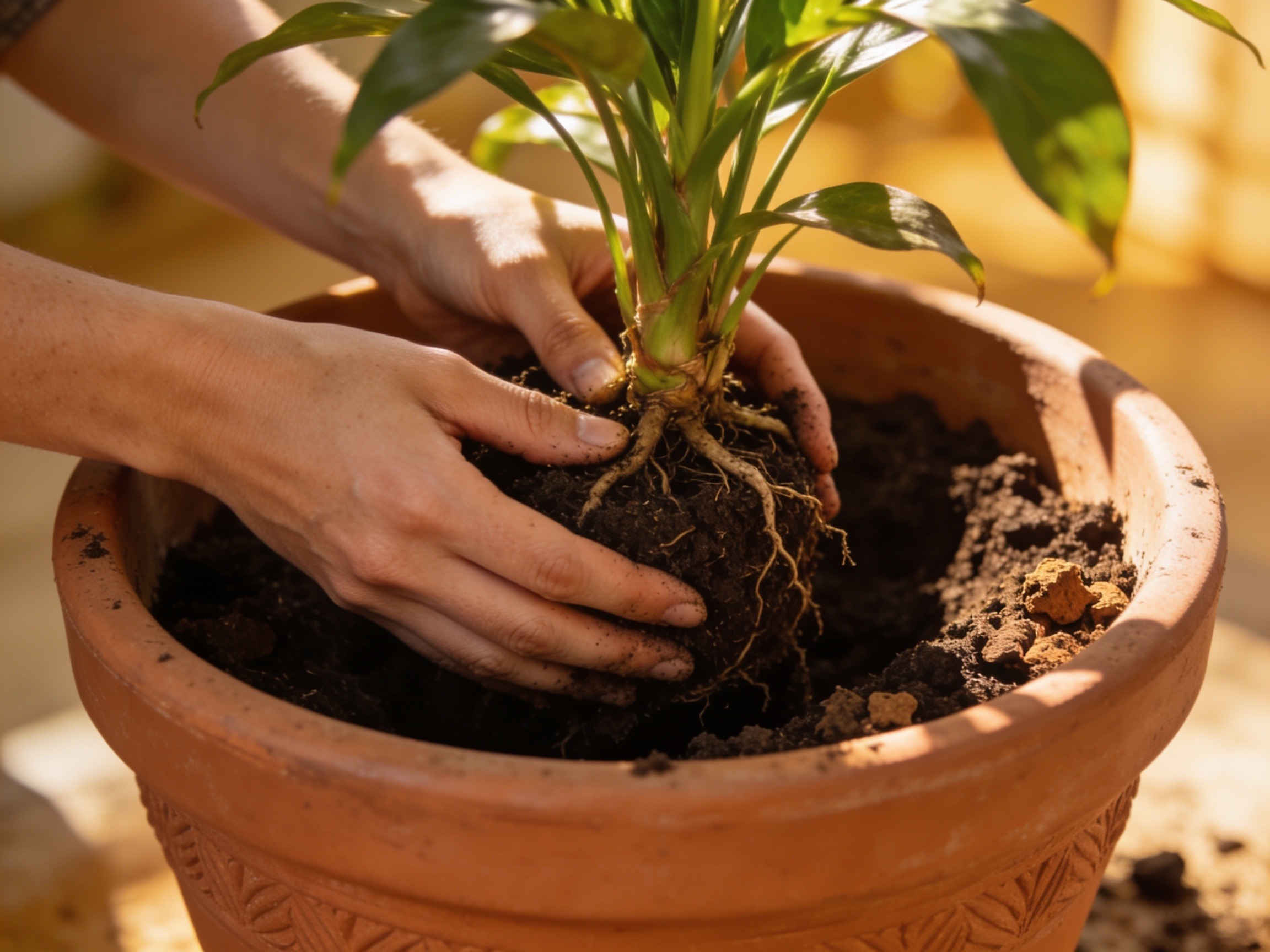
Roots circling tightly around the inside of a pot are the clearest sign it's time to move up a size.
Recognizing a Root-Bound Plant
Roots emerging from drainage holes, water running straight through without being absorbed, and slowed growth despite good care are all signs a plant has outgrown its pot. Gently sliding the plant out to check for a dense mass of circling roots confirms it.
Sizing Up Gradually
Move up just one pot size at a time — typically 1 to 2 inches larger in diameter — rather than jumping to a much bigger container. Too much extra soil around a smaller root ball holds excess moisture and can lead to root rot before the roots have a chance to grow into it.
Timing and Aftercare
Spring, as a plant enters active growth, is the best time to repot, giving it a full season to establish in its new container. Water thoroughly right after repotting, and hold off on fertilizing for a few weeks to let disturbed roots settle first.