Raspberries return reliably year after year from the same planting, and once established, a small patch can produce far more fruit than most gardeners expect from so little space.
Grown on woody canes, raspberries come in summer-bearing types (one big harvest) and fall-bearing (ever-bearing) types that produce a second, later crop on the same year's new growth, giving gardeners flexibility in how they plan the harvest.
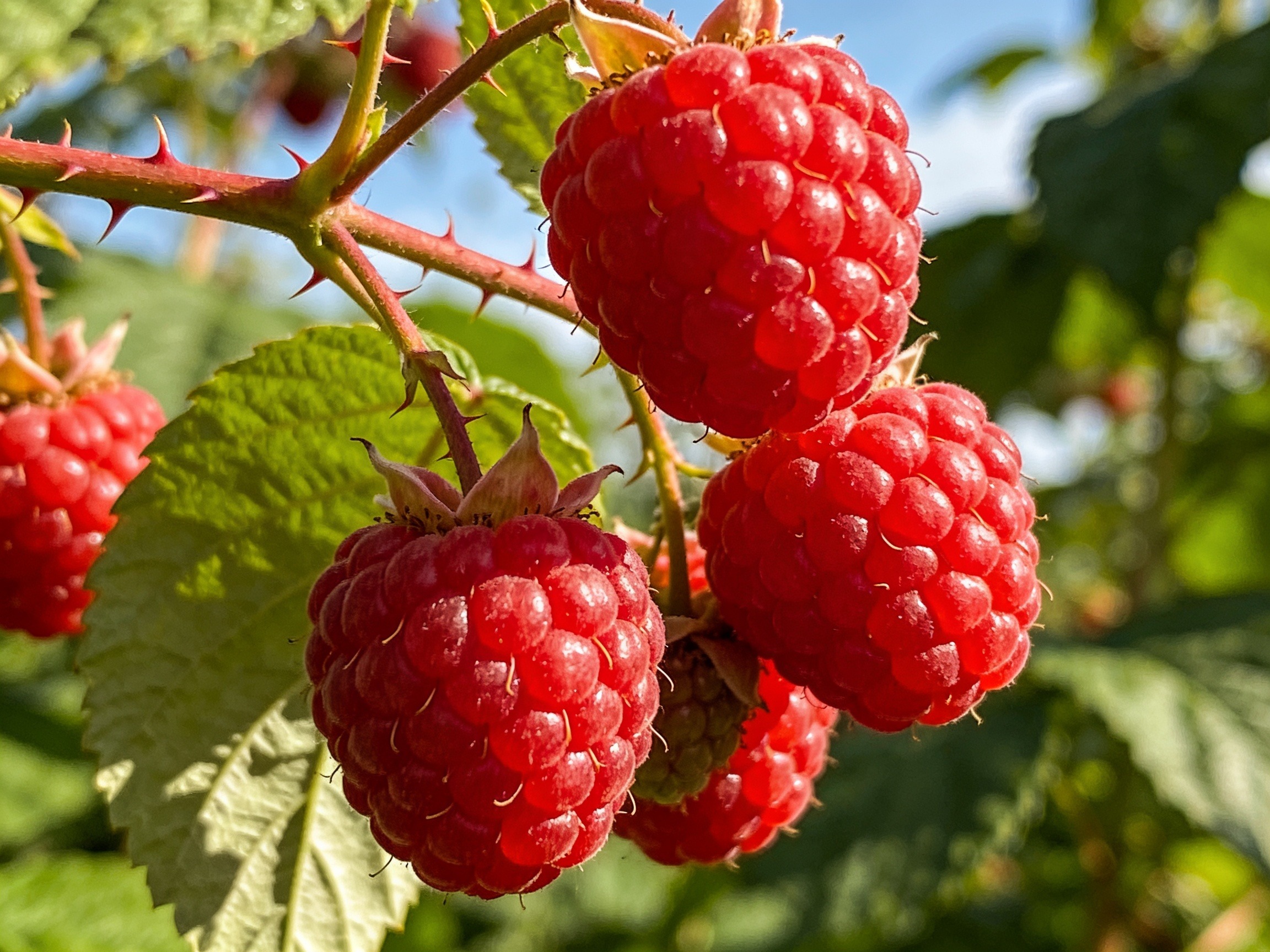
Raspberries want full sun and well-draining soil, and they need a trellis or support system to keep the canes from sprawling. Knowing whether you have summer-bearing or fall-bearing canes matters for pruning — cut summer-bearing canes down after they fruit, but fall-bearing canes can be mowed to the ground each winter for a reliable single fall crop.
Raspberries don't ripen further once picked, so harvest only fully colored, easily-detaching berries for the best flavor and sweetness.