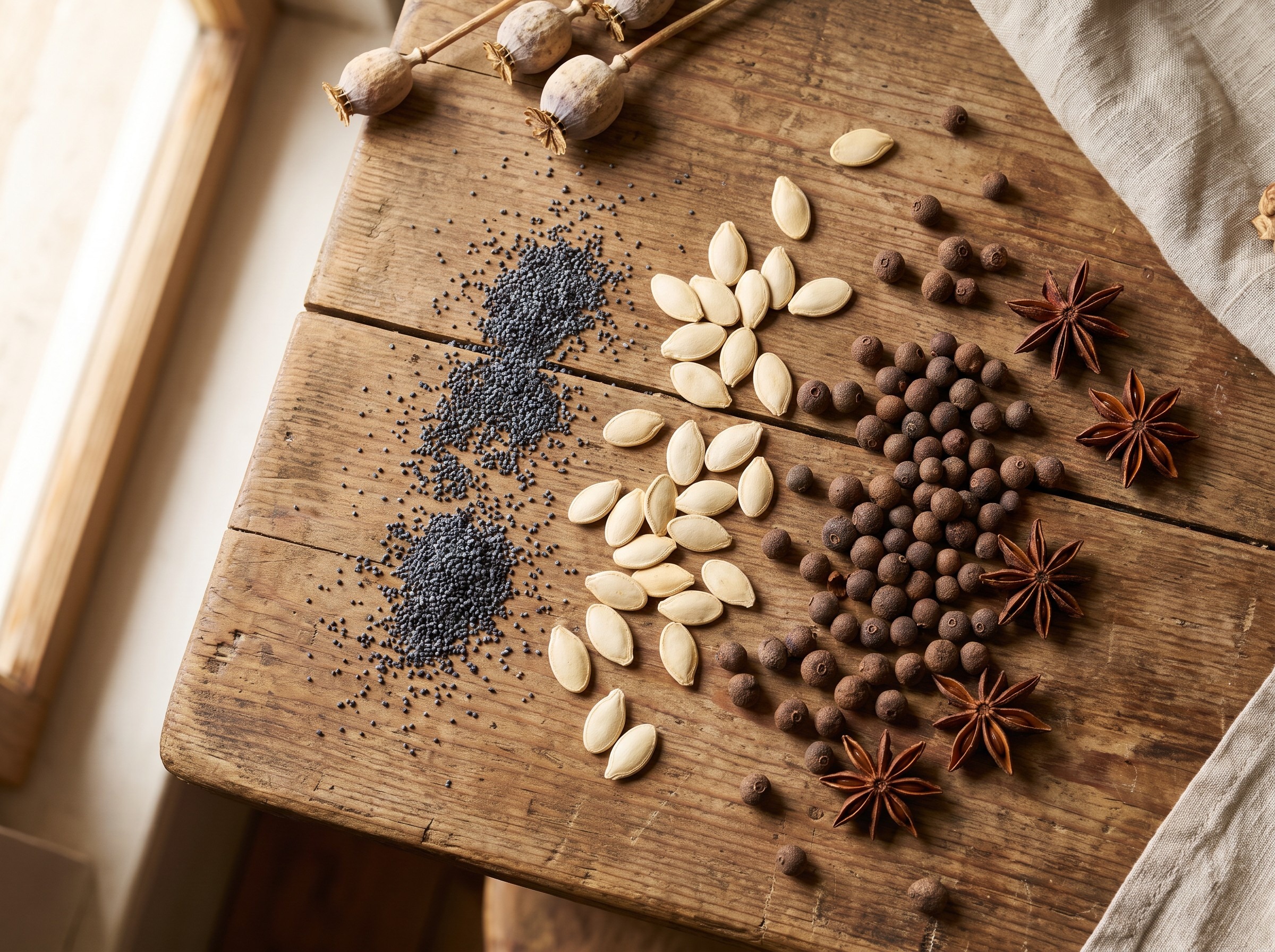
Poppy Seeds
Poppy seeds come from the same striking annual (Papaver somniferum) grown for opium, though the tiny, mature seeds themselves contain none of the compounds that make the unripe seed pod's sap notable — they're entirely safe and widely used in baking. A single seed head can hold thousands of the fine, nutty-tasting seeds.
Growing Poppies for Seed
Poppies are direct-sown in early spring since the fine seed and taproot don't transplant well, and the papery-petaled flowers give way to distinctive pepper-shaker seed pods as they fade. Left on the plant to dry fully, the pods rattle audibly with ripe seed and can simply be shaken out over a bowl once brown and brittle. Local regulations on growing Papaver somniferum vary, so it's worth checking before planting.
Culinary Uses
Poppy seeds bring a mild, nutty crunch to bagels, muffins, and salad dressings, and ground poppy seed fillings are a classic in Central and Eastern European pastries. Toasting the seeds briefly deepens their flavor considerably compared to using them raw.
Store poppy seeds in the refrigerator or freezer — their high oil content means they go rancid faster than most other seasonings kept at room temperature.