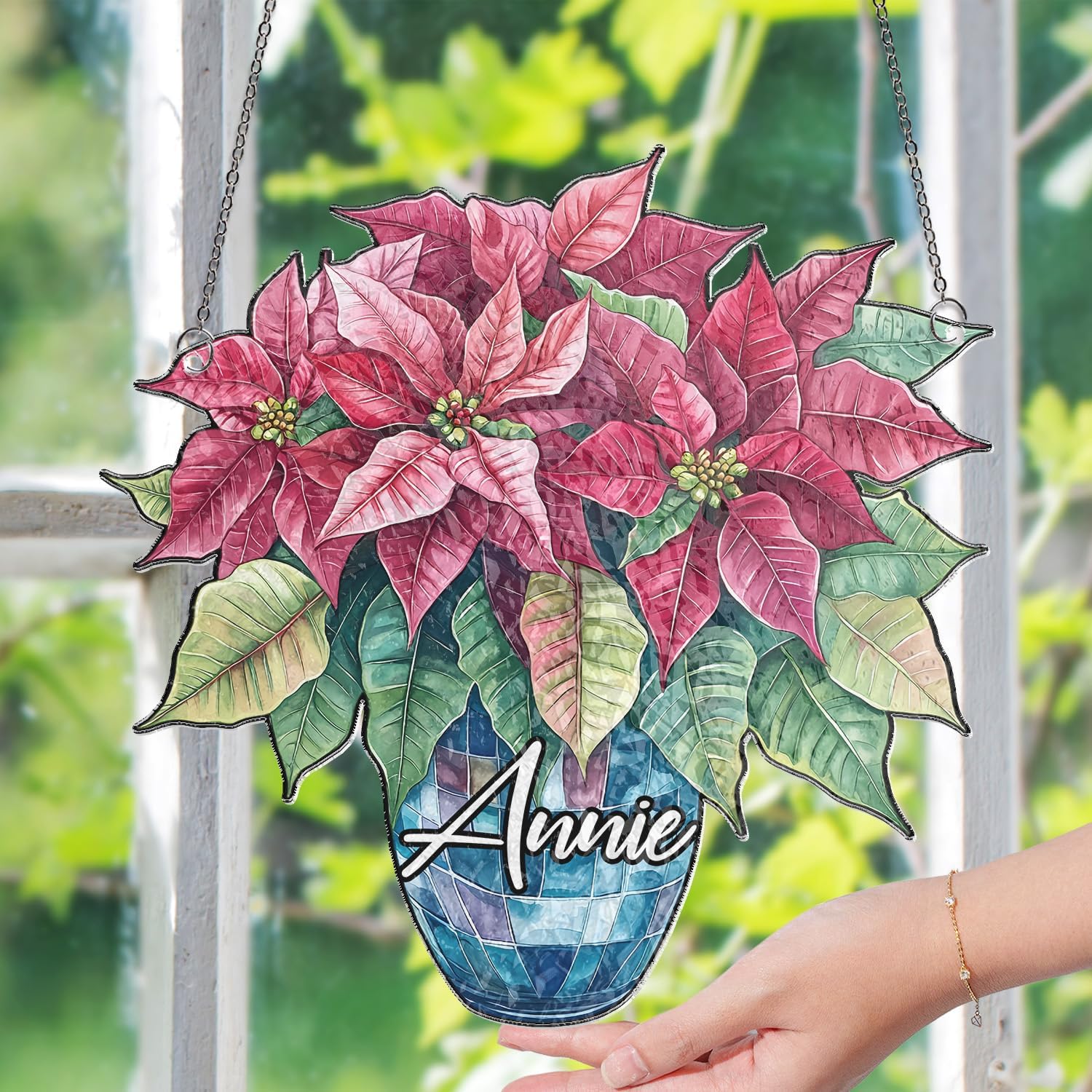
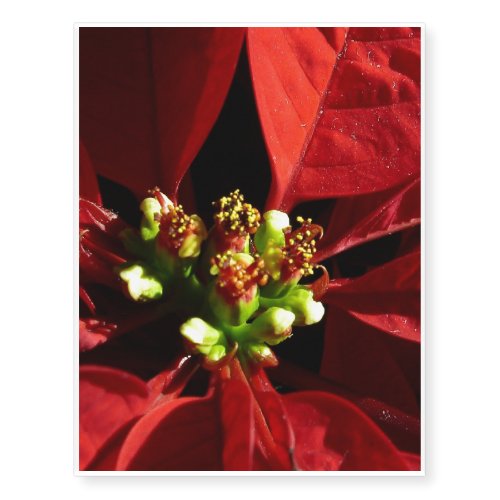
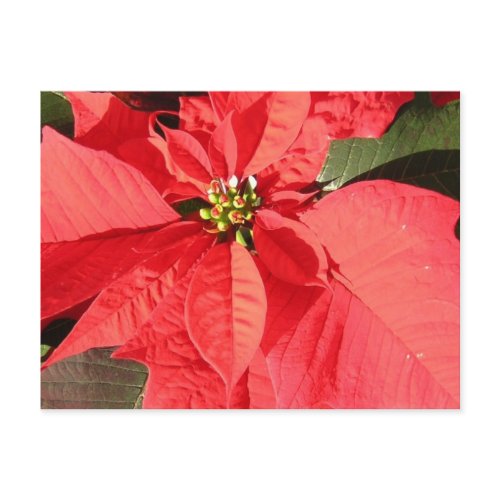
What looks like a poinsettia's flower is actually a rosette of colored leaves called bracts — the true flowers are the tiny, unassuming yellow clusters at the center.
Native to Mexico, where it can grow into a leggy shrub over ten feet tall, the poinsettia has become the best-selling potted plant in the world around the winter holidays, thanks to growers who time its color change to peak right on schedule.
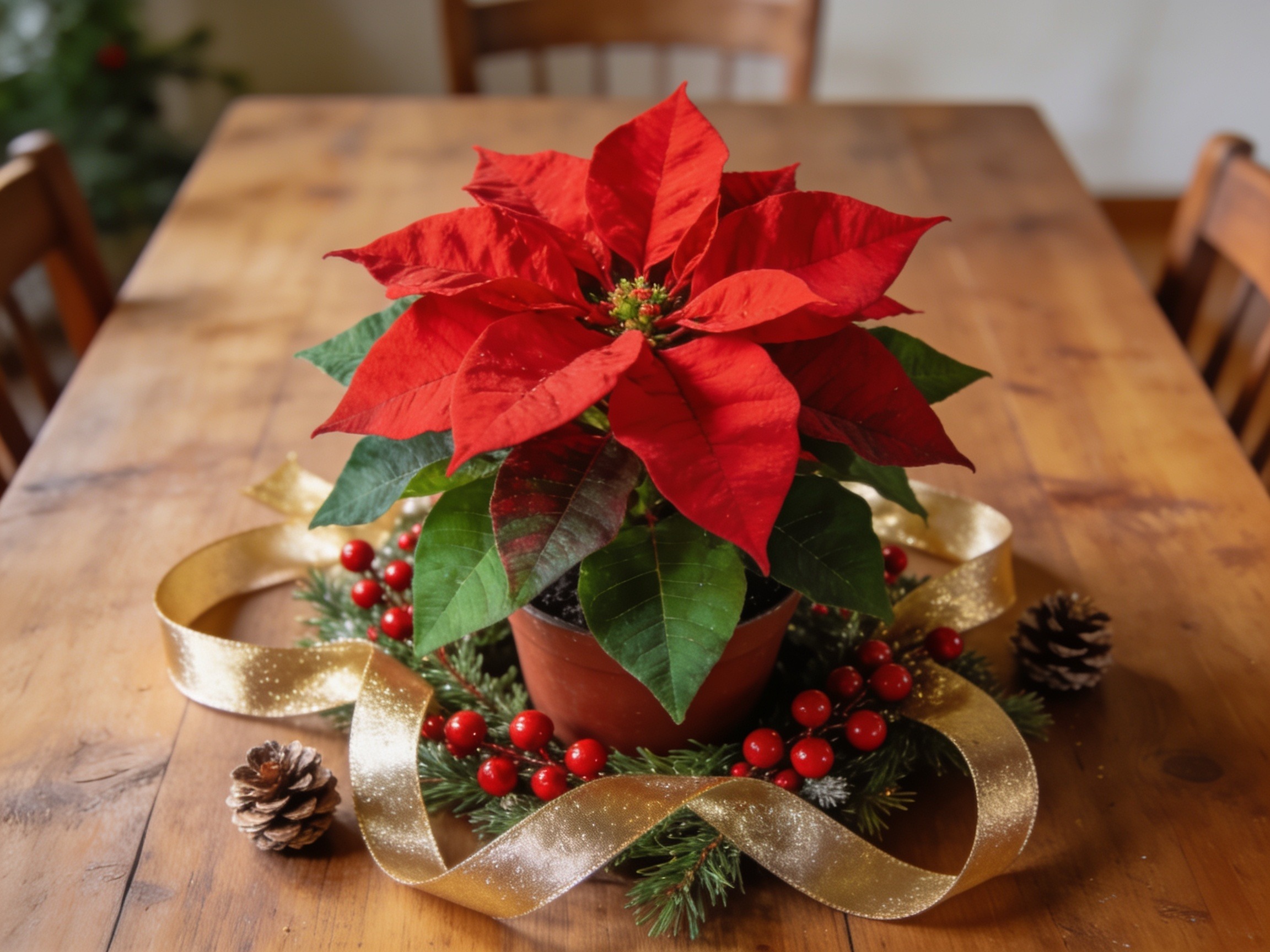
Poinsettia symbolizes celebration and good cheer, tied inseparably to the Christmas season in most Western cultures — in Mexico it is also known as the "Flower of the Holy Night."
Keep poinsettias in bright, indirect light indoors, away from cold drafts and heating vents, and water only when the top inch of soil feels dry. To rebloom next year, they need several weeks of complete darkness for 12+ hours a night starting in early fall to trigger the bracts to change color again.
Poinsettia's milky sap can cause mild skin irritation and stomach upset if eaten, though claims of it being deadly poisonous are largely exaggerated — it's still best kept away from curious pets and small children.