Nepeta, better known as catmint, forms billowing mounds of soft gray-green foliage topped with a long-blooming haze of small lavender-blue flowers — a border edging favorite for its tidy habit and nonstop color.
A close relative of true catnip, ornamental catmint varieties like "Walker's Low" are prized for their season-long bloom, drought tolerance, and near-total resistance to deer and rabbits.
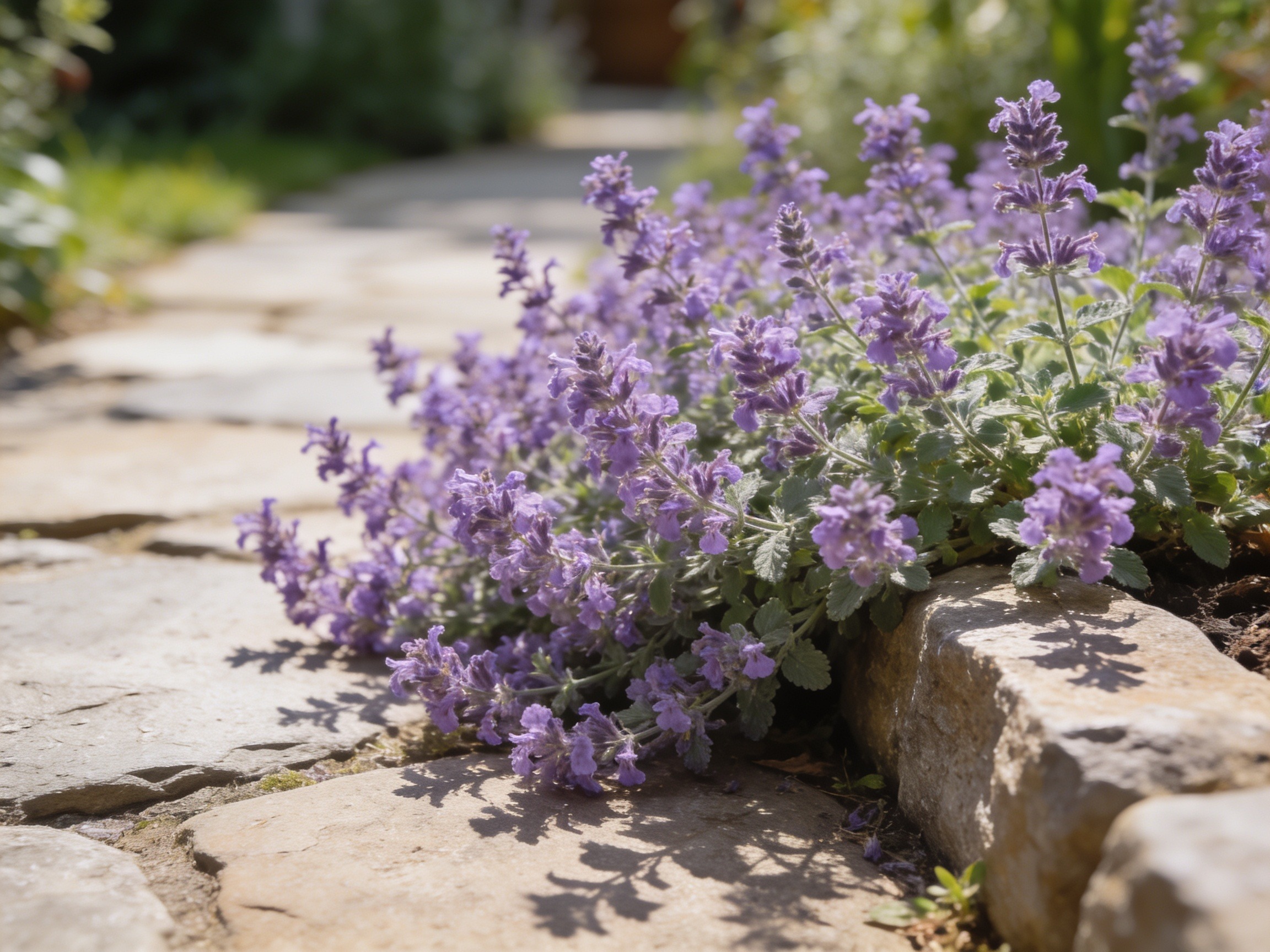
Catmint has long been associated with joy and playfulness, thanks to its famous effect on cats, while in older herbal traditions it also symbolized courage and protection.
Catmint thrives in full sun and average to lean, well-drained soil, tolerating heat and drought with ease once established. Shear plants back by half after the first bloom flush to tidy the mound and trigger a fresh round of flowers. It spreads readily but is easy to divide and share in spring or fall.
Catmint's close relative, true catnip (Nepeta cataria), has a long folk history as a calming herbal tea for humans, traditionally used to ease mild anxiety, indigestion, and sleeplessness.