Introduction to Orchids
Orchids form the largest family of flowering plants on Earth, and they've adapted so successfully that Antarctica is the only continent where they don't grow naturally.
Three Growth Habits
Orchids fall into three structural types. Sympodial orchids, adapted to dry climates, store water in swollen pseudo-bulb stems. Monopodial orchids grow a single upward stem that continually produces new leaves from its tip — these don't reproduce easily, but a damaged main stem can sprout a new young plant from its base. Diapodial orchids grow like sympodials but without the water-storing bulbs. Most orchids attach to trees or twigs (epiphytes), some grow on rock, and others root conventionally in soil.
Roots That Do Double Duty
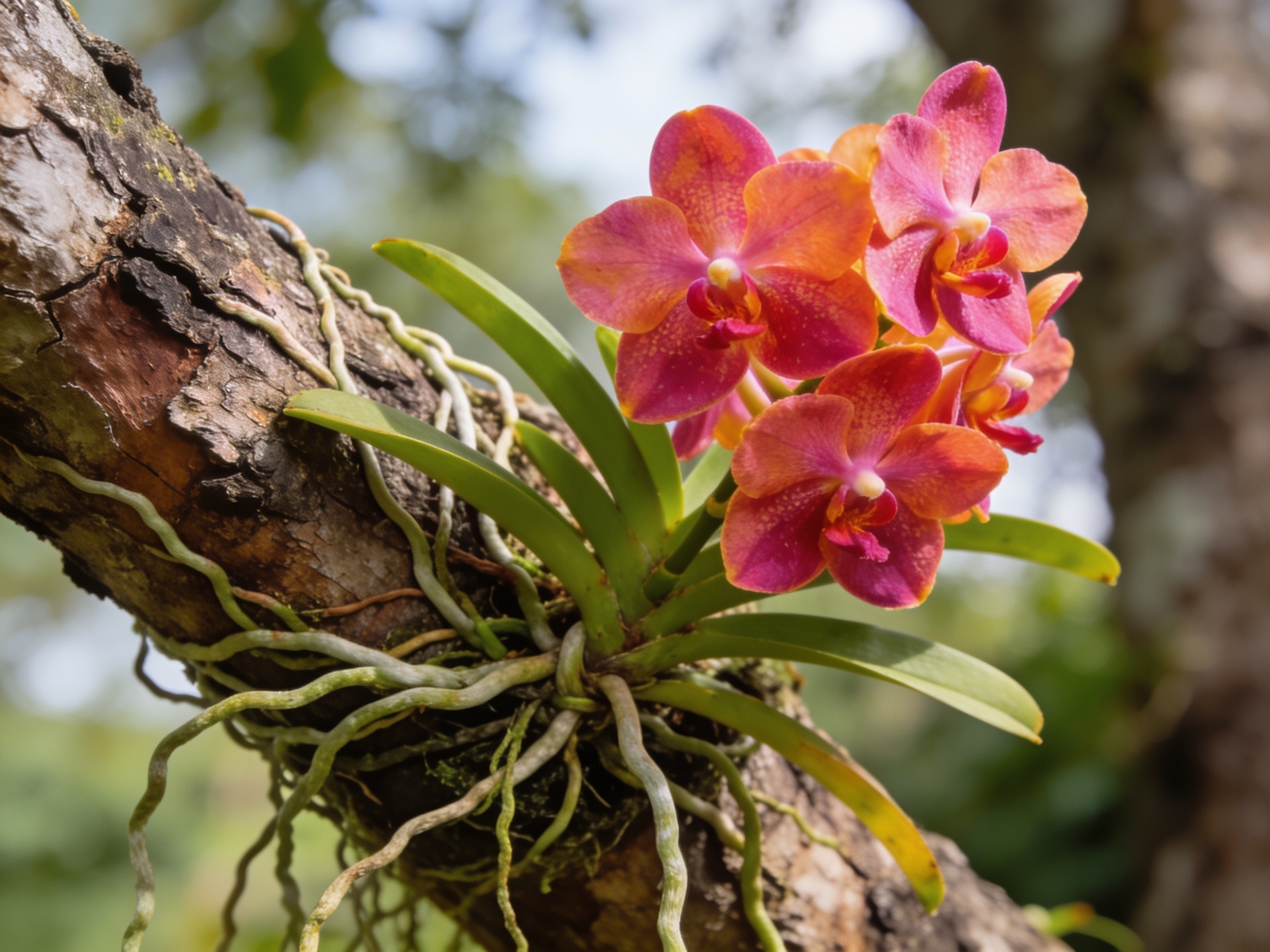
An epiphytic orchid's exposed roots serve two purposes at once — anchoring it to a tree or rock, and absorbing moisture directly from the air, sometimes even drawing nourishment from bird droppings or mold on tree bark. This modest set of needs is a big part of why orchids have survived so successfully across so many environments. The family keeps growing too: new hybrids, both naturally occurring and deliberately bred, are recorded constantly at the Royal Horticultural Society in London, with some appearing and disappearing faster than they can be catalogued.
Some orchid species are legally protected and endangered — in the U.S., picking or damaging certain wild orchids is punishable under both federal and state law.