Hollyhocks tower over the rest of the border, sending up flower spikes that can reach eight feet, lined top to bottom with saucer-sized blooms that open in succession up the stalk.
A cottage-garden staple for centuries, hollyhocks were once planted by outhouse doors as a discreet marker, and today they remain a favorite for adding dramatic vertical height along fences and walls.
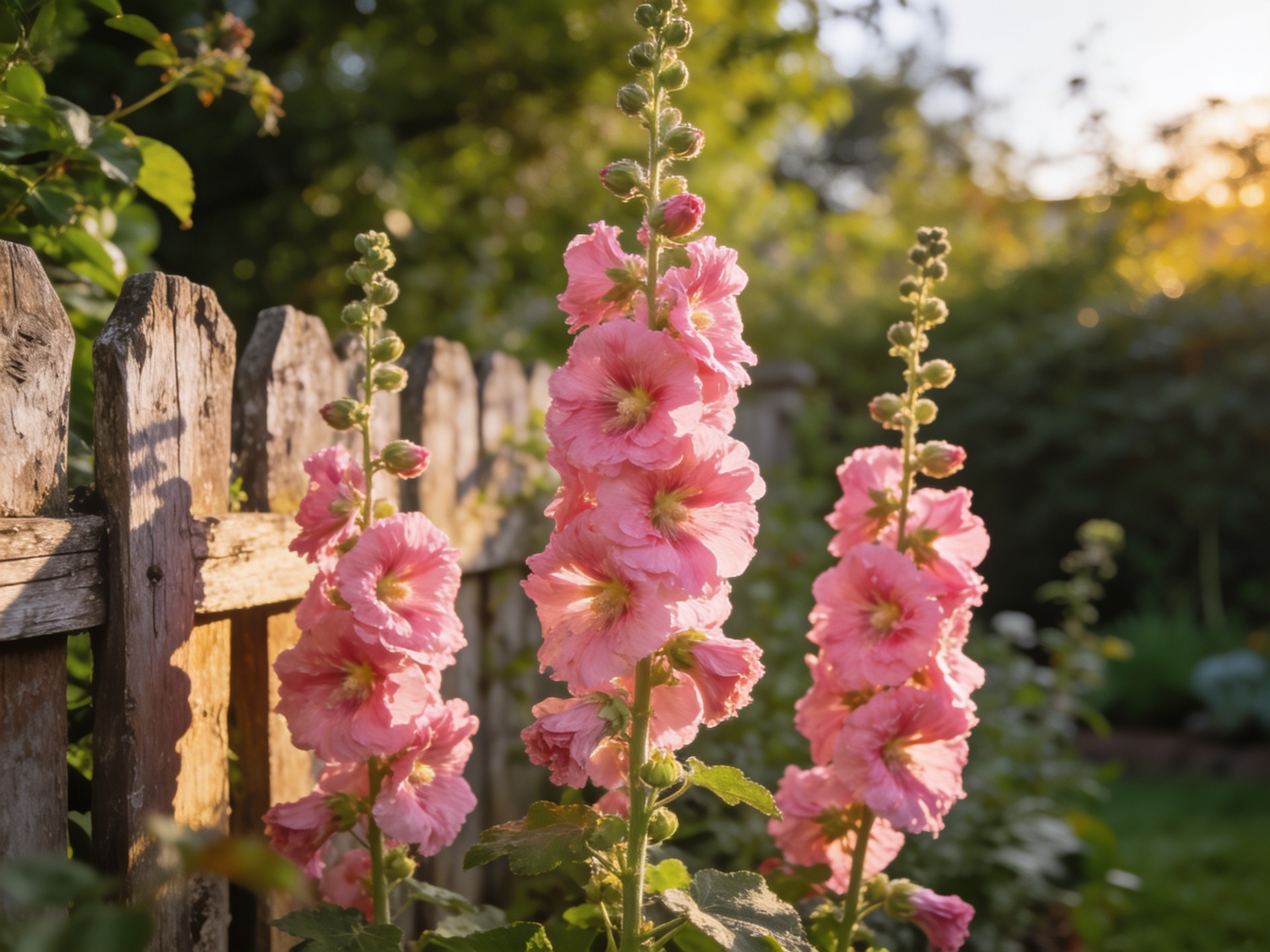
Hollyhock symbolizes ambition and fruitfulness, its towering height long read as a symbol of reaching for high goals.
Hollyhocks want full sun and well-draining soil, and their tall stalks benefit from a sheltered spot or a stake in windy gardens. They're prone to rust, a fungal disease that mottles the lower leaves — removing affected foliage promptly and watering at the base rather than overhead helps keep plants healthier.
Hollyhock flowers and leaves have a history of use in folk herbalism as a soothing addition to teas for the throat, related to their botanical cousin, marshmallow.