Long before tulips became synonymous with the Netherlands, they originated far away in the mountains of Central Asia, where wild tulips still grow today.
From Central Asia to the Ottoman Empire
Wild tulips were first cultivated in Persia and later became deeply embedded in Ottoman culture, where they were prized in imperial gardens and became a common motif in art and textiles. The tulip's name is thought to derive from the Persian word for turban, which its bloom shape was said to resemble.
Arrival in the Netherlands
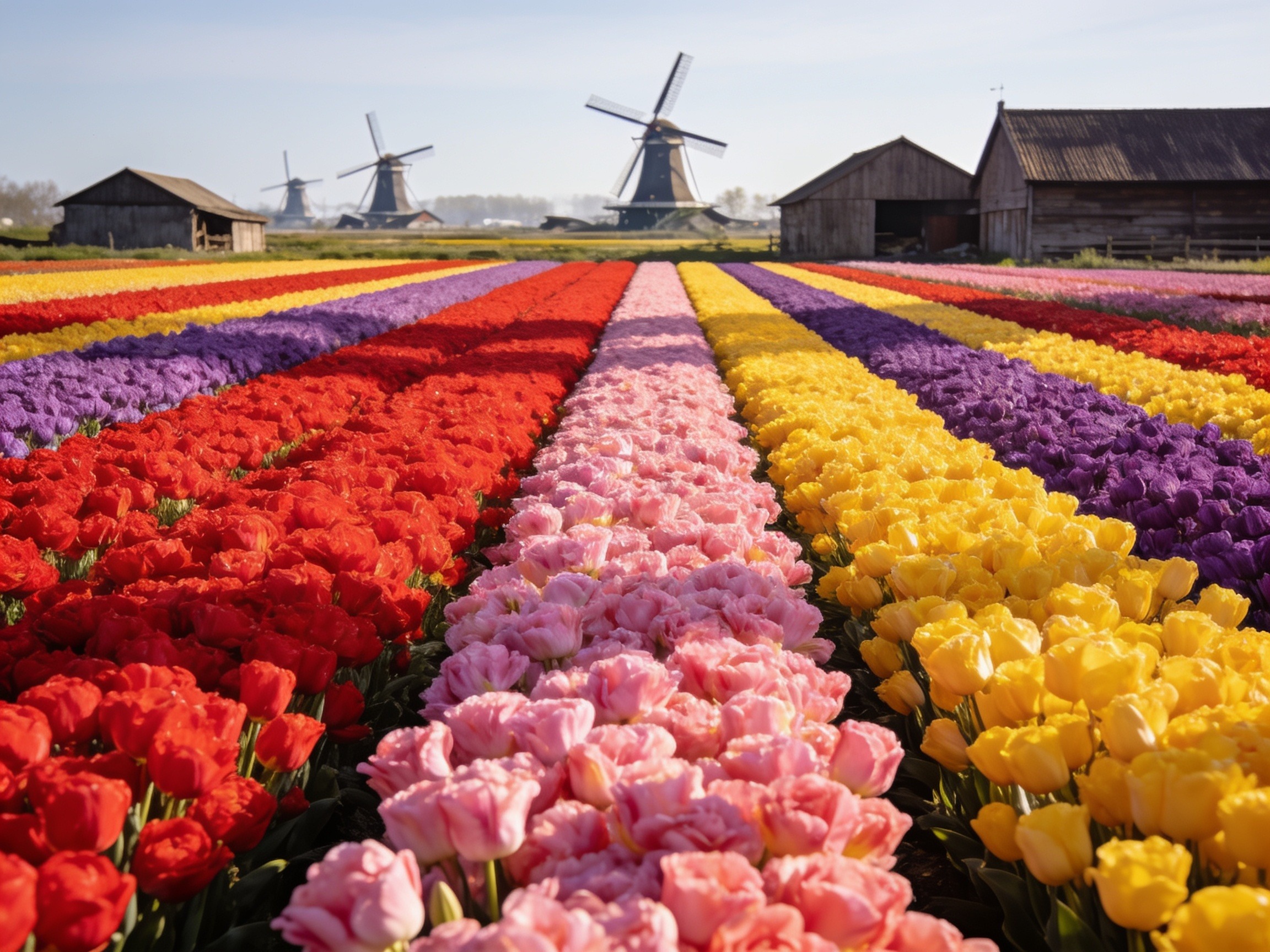
Tulip bulbs reached Western Europe in the late 1500s, and the Netherlands' climate and soil turned out to be exceptionally well suited to growing them, launching the country's now-famous tulip industry. This period also produced "tulip mania" in the 1630s, when speculative trading drove some rare tulip bulbs to extraordinarily high prices before the market abruptly collapsed.
A Lasting Legacy
Despite that early speculative bubble, the Netherlands remained the center of global tulip cultivation, and today produces the majority of the world's tulip bulbs, exported to gardens everywhere.