Heuchera, known as coral bells, is grown as much for its striking mounded foliage — in shades of lime, amber, purple-black, and silver-veined — as for the delicate, wiry stems of tiny bell-shaped flowers it sends up in late spring.
Native to the woodlands and rocky slopes of North America, coral bells are a shade-garden staple, offering season-long color contrast in beds, containers, and edgings.
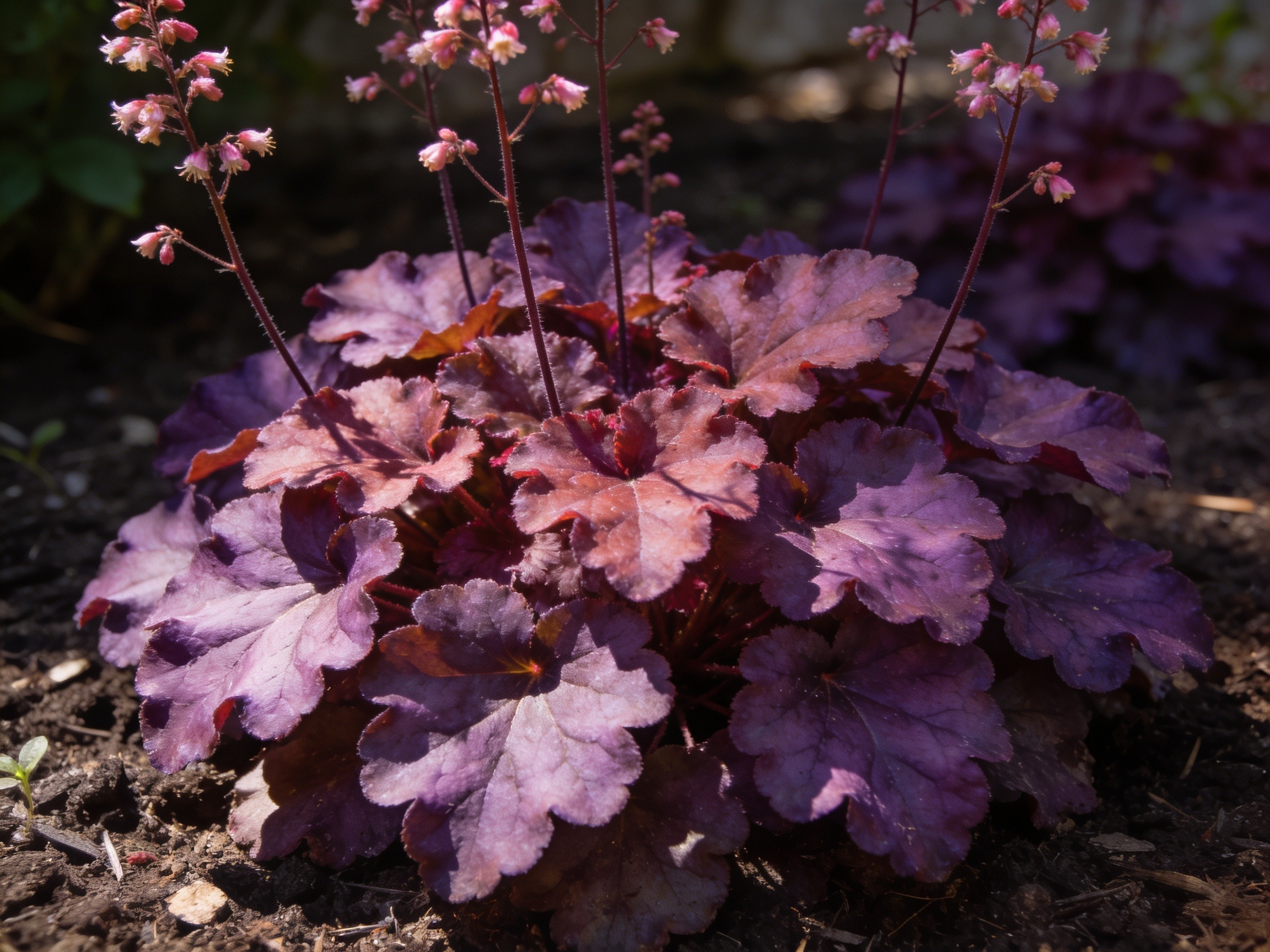
Coral bells symbolize gentleness and quiet warmth — their soft, nodding blooms and old common name "alumroot" tie the plant to a long tradition of understated, comforting garden gifts.
Coral bells prefer partial shade and rich, well-drained soil, though many modern varieties tolerate more sun with consistent moisture. Remove faded flower stalks to keep plants tidy, and top-dress with compost each spring, as crowns can heave out of the soil over winter in colder climates and benefit from being replanted slightly deeper.
Indigenous peoples of North America traditionally used the astringent root of wild Heuchera species, hence the old name "alumroot," in poultices and washes for minor wounds and skin irritation.