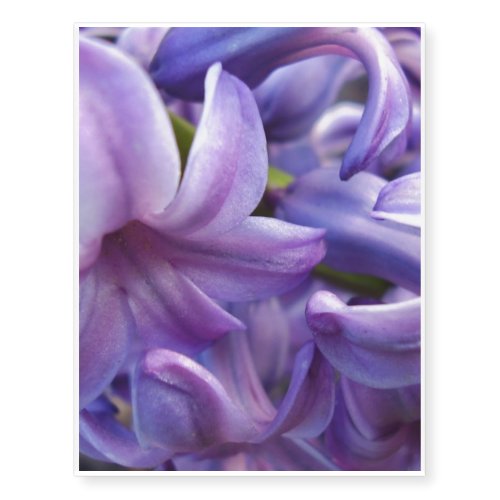
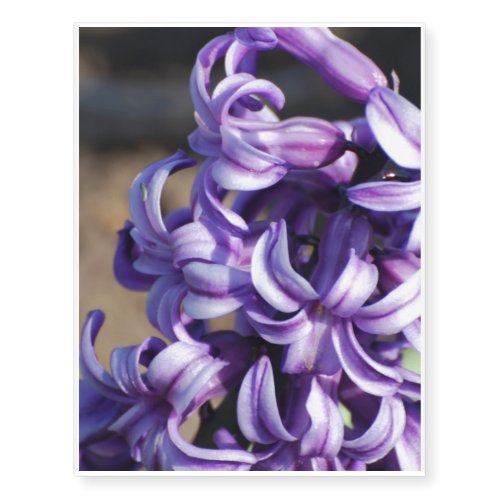
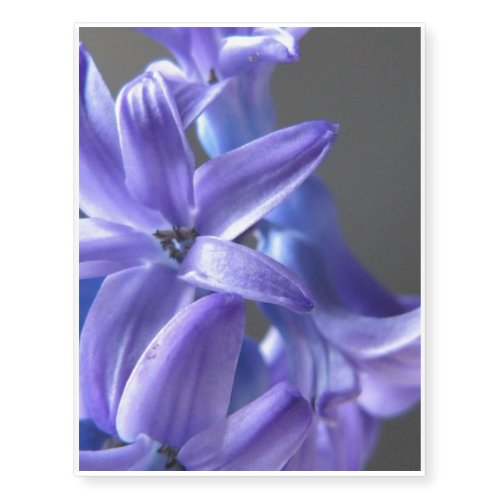
Muscari, or grape hyacinth, produces dense little spikes of tightly packed, round blue flowers that closely resemble upside-down bunches of grapes, appearing in gardens each spring alongside daffodils and tulips.
Despite the name, it's unrelated to true hyacinths — this small, easygoing bulb spreads readily into dense drifts over the years, making it one of the most reliable naturalizers for spring color at the front of a border.
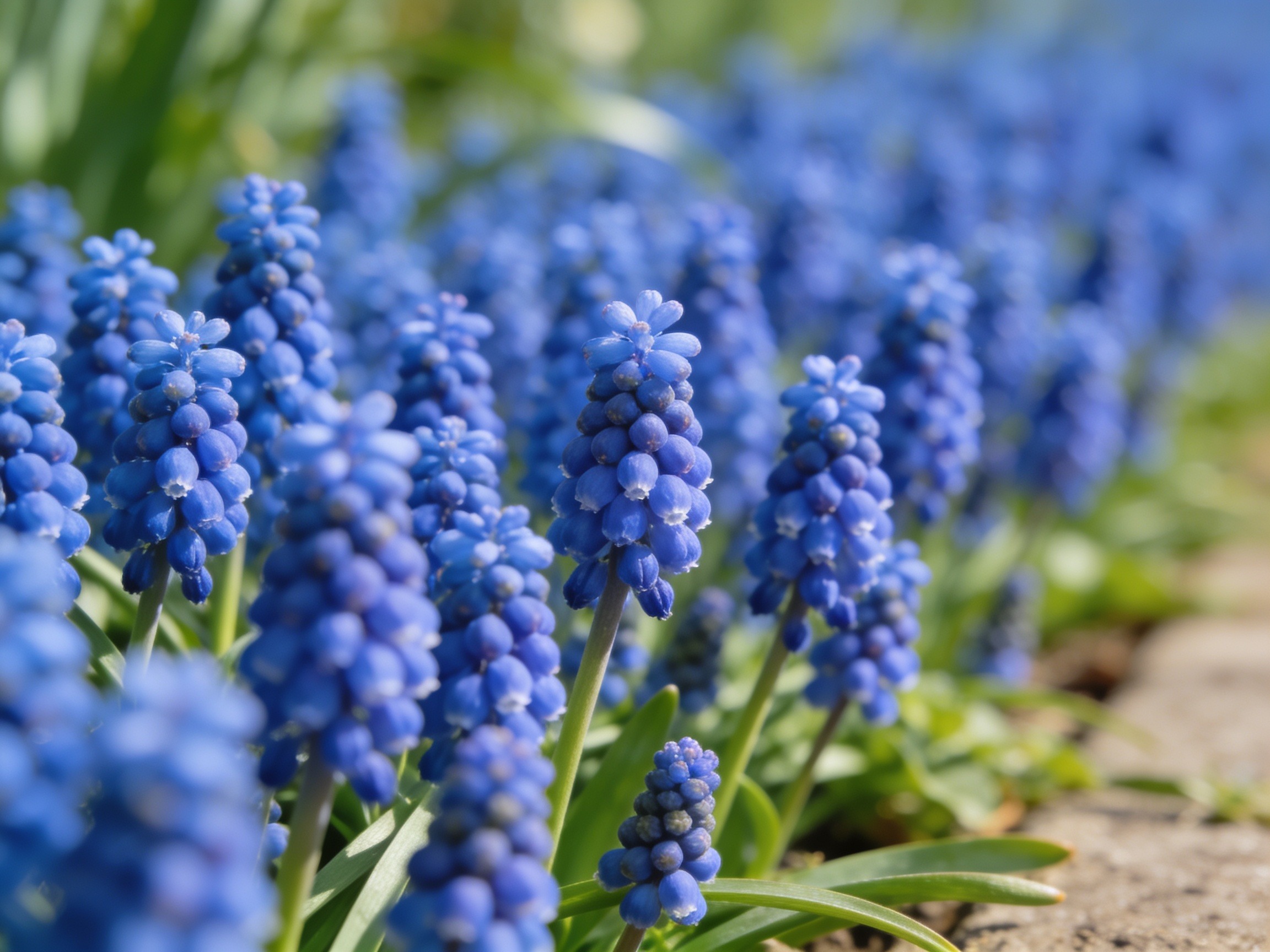
Like true hyacinths, grape hyacinth carries associations with rebirth and joyfulness, its small, cheerful blue spikes among the first true blues to appear in the garden after a long winter.
Plant grape hyacinth bulbs in fall, about three inches deep, in well-drained soil in full sun to partial shade. They ask for almost nothing once planted, multiplying readily by both bulb offsets and self-seeding. Let the strappy foliage die back naturally after blooming, and divide overcrowded clumps every few years if flowering starts to decline.
Grape hyacinth has no significant history of herbal or medicinal use; it is grown strictly as an ornamental spring bulb, and its bulbs, like many in the lily family, are not intended for consumption.