Gerbera Daisies
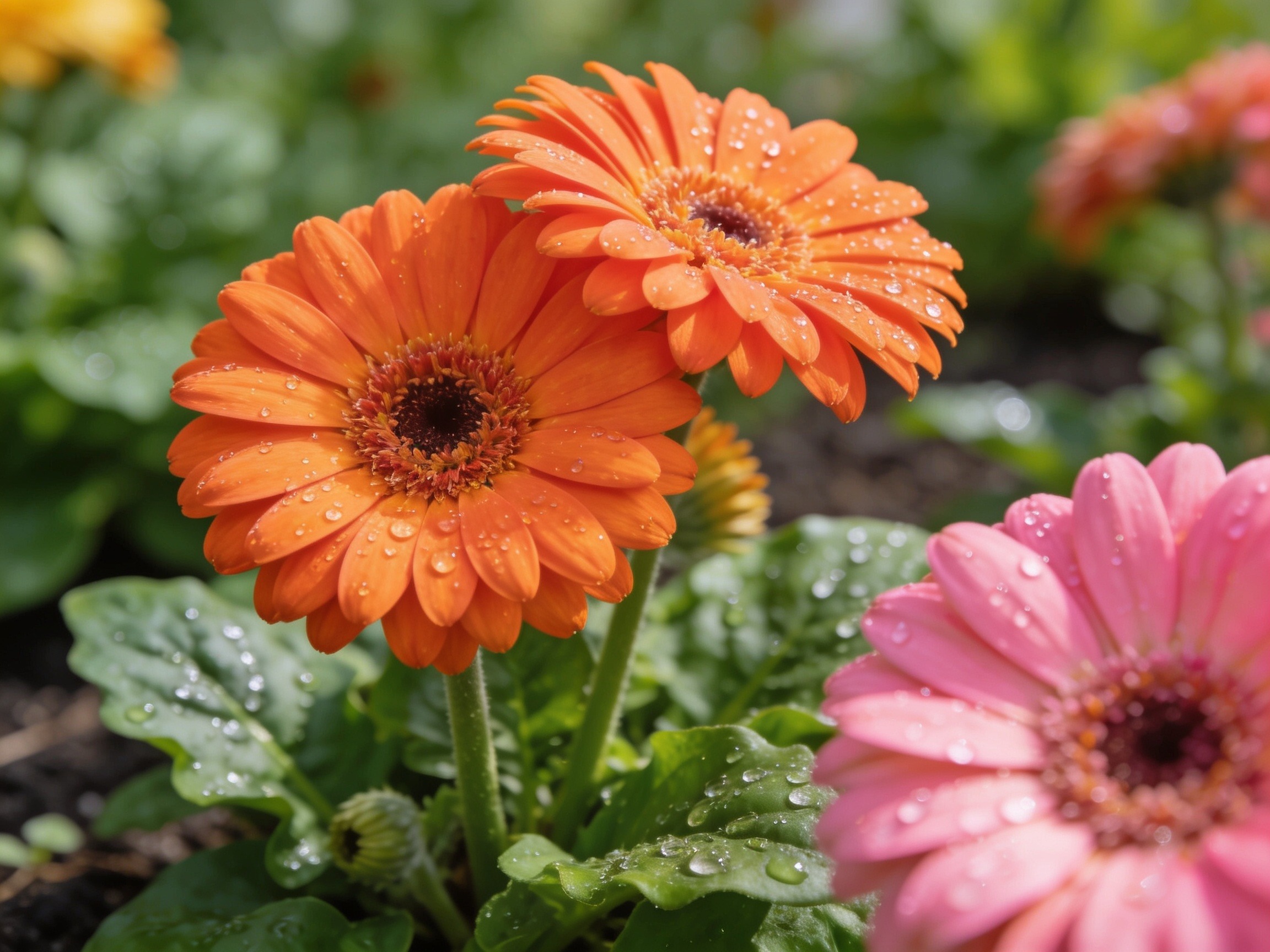
Gerbera daisies belong to the sunflower family, and their bold, saucer-shaped blooms make them a favorite for both garden beds and cut-flower arrangements.
Where They Come From
The genus is named for Traugott Gerber, a German naturalist honored by his friend, botanist Carolus Linnaeus. Of roughly 30 known species, most grow wild across parts of Africa and South America, with some reported growing in tropical Asia as well. The most familiar garden species, Gerbera jamesonii, was first scientifically described in 1889 and is native to South Africa, where it's also known as the Transvaal daisy or Barberton daisy.
What Makes the Bloom Distinctive
What looks like a single flower is actually a dense head of many small individual florets, giving the bloom its full, saturated look. Flower heads run roughly 7 to 12 centimeters across, in yellow, red, white, orange, and pink. Because of their vivid color and long vase life, gerbera daisies are a popular choice for weddings, anniversaries, and other special-occasion arrangements.
Gerbera daisies are often grown under greenhouse conditions outside their native range — a good option if your climate doesn't naturally suit them but you still want that bold color in a bed or bouquet.