Garden Care Tips
Good bloom starts with a few basics that apply across almost every flowering plant, before you even get to variety-specific care.
General Upkeep
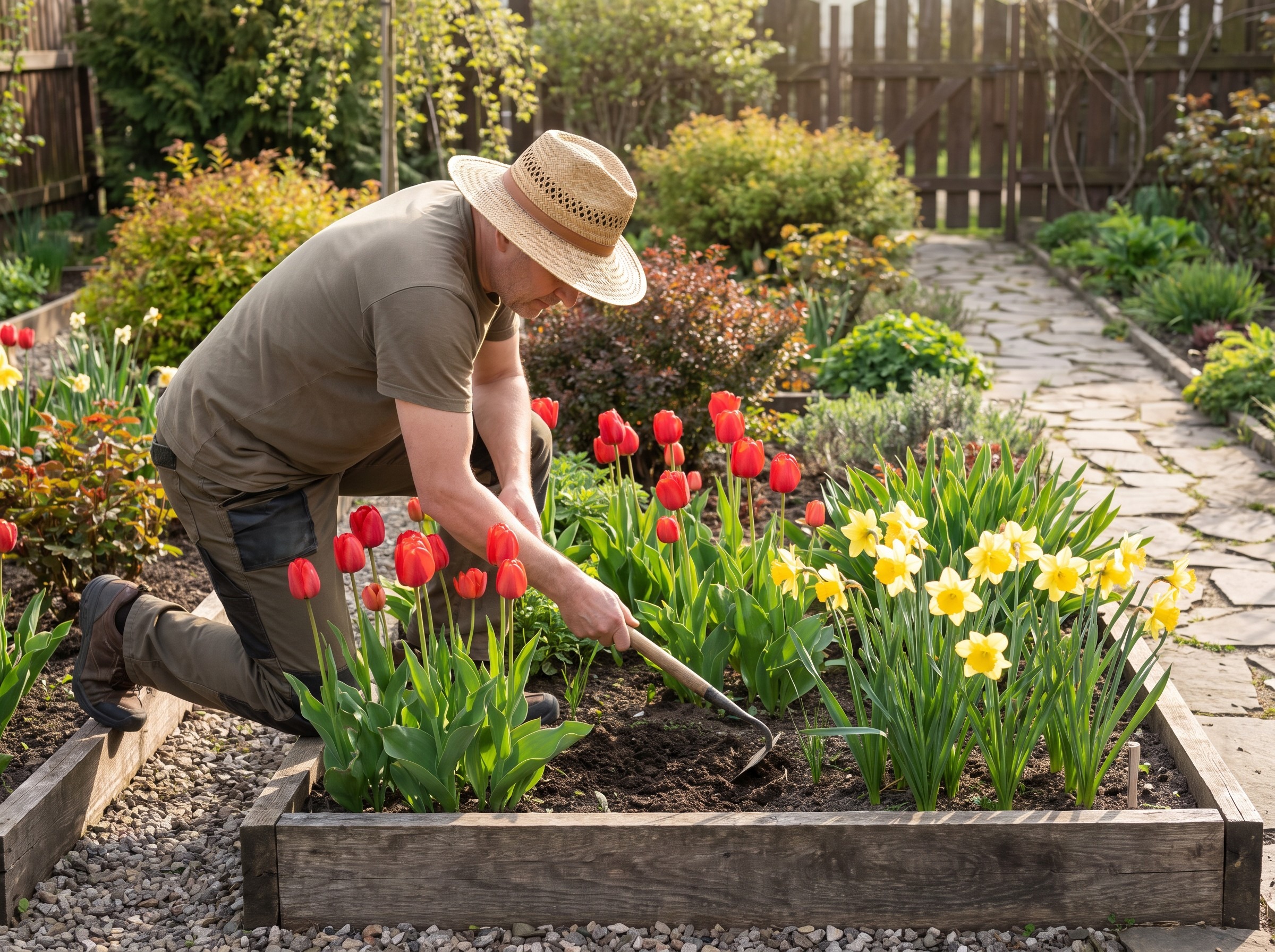
Regular hoeing or cultivating keeps weeds down and soil in good condition, and routine spraying or dusting protects against the insects and diseases that inevitably show up in a flower bed. One easy mistake to avoid: skip high-nitrogen fertilizers on flowering plants. Nitrogen pushes leafy growth at the expense of blooms, so a balanced flower feed serves the display far better.
A Few Variety-Specific Notes
Chrysanthemums want sunny, well-drained spots and staking if tall, with tip-pinching early on to encourage bushier growth. Daffodils go in 5–7 inches deep in fall, at a uniform depth for even stalk height, and can stay in the ground until crowded. Tulip beds need lifting and resetting after about three years, while gladiolus bulbs go in as trees leaf out, 4–5 inches deep, and benefit from a light dusting of insect powder before winter storage. Iris dislike fresh manure and are vulnerable to the iris borer — weekly malathion treatments from early spring to just before bloom keep it in check.
Phlox blooms fade faster in direct sun — plant it in a partly shaded spot and avoid overhead evening watering, which encourages mildew.