Forsythia erupts into a wall of golden-yellow blooms along its bare branches each early spring, often before any leaves appear and before most other shrubs have even begun to stir.
Native to Asia and southeastern Europe, forsythia is one of the earliest and most dependable signs of spring in temperate gardens. Its arching branches, once established, can grow quite large, making it a popular choice for informal hedges and privacy screens.
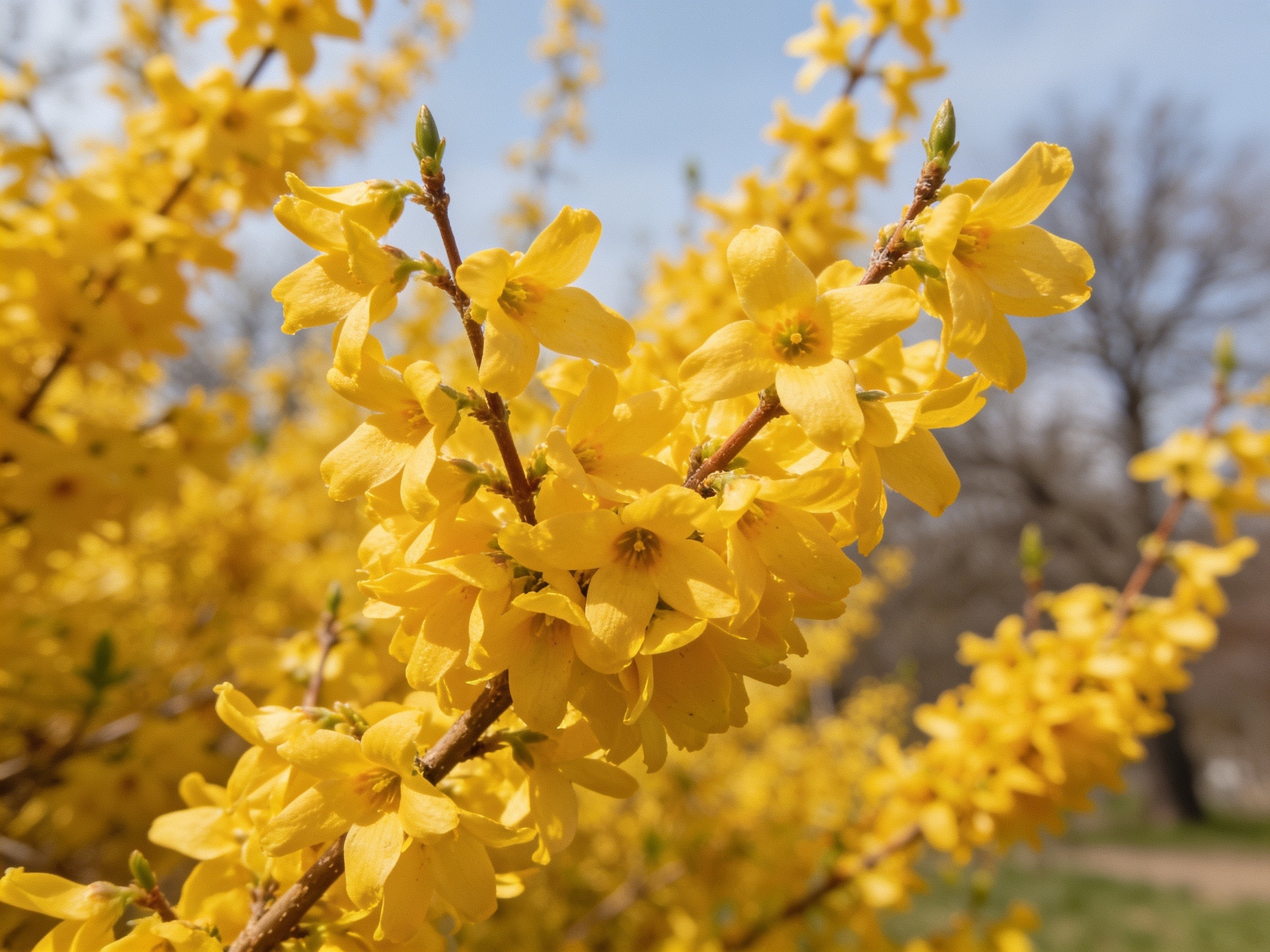
Forsythia symbolizes anticipation and new beginnings, its early golden bloom widely read as a hopeful signal that winter is finally coming to an end.
Forsythia wants full sun for the most abundant bloom, though it tolerates partial shade with somewhat reduced flowering. Prune right after flowering, since it blooms on the previous year's wood — pruning later in the season removes next spring's flower buds.
Forsythia fruit has a long history of use in traditional Chinese medicine, where it's valued for its anti-inflammatory and antiviral properties and remains a common ingredient in herbal formulas today.