Easter Lily
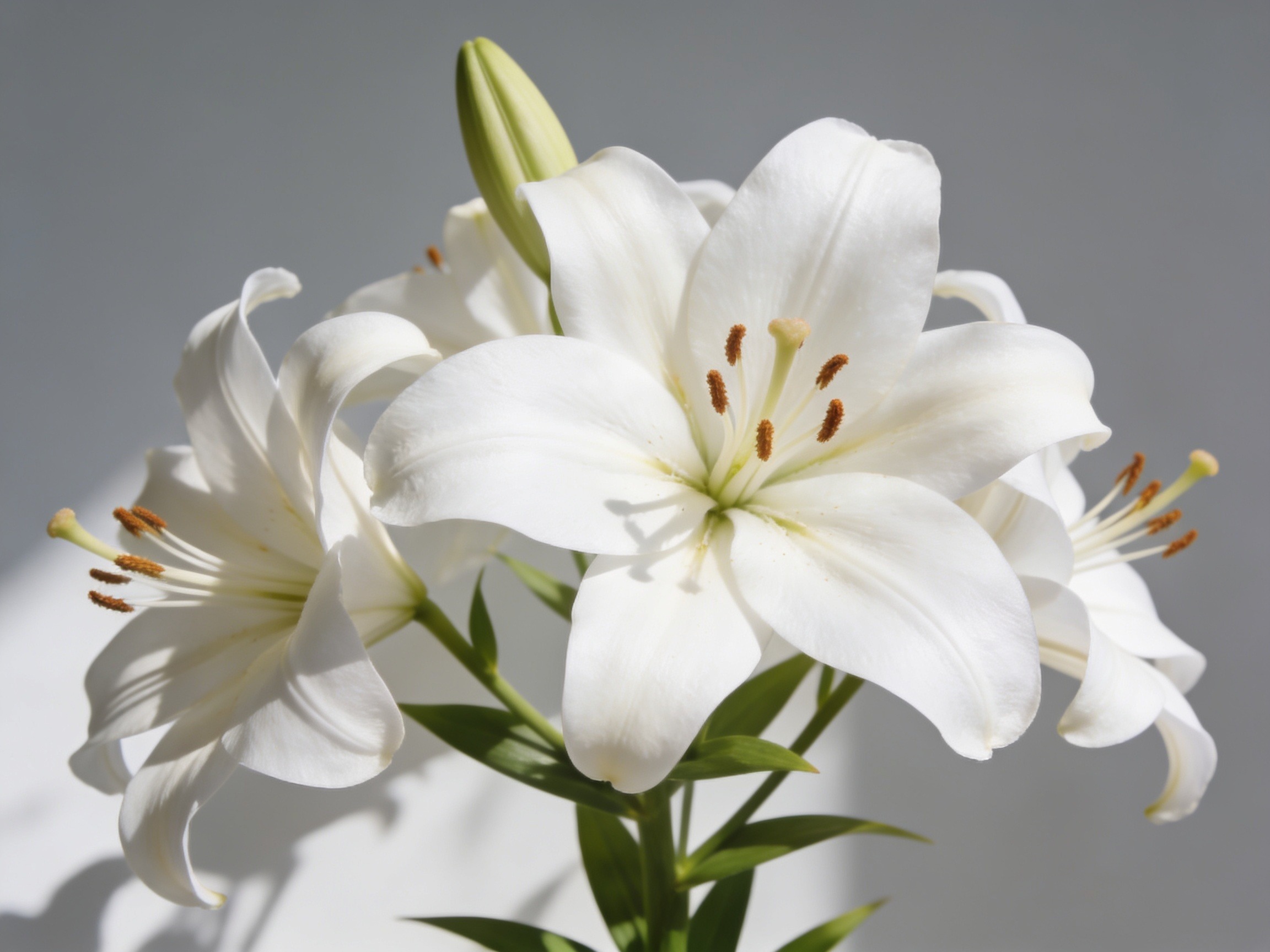
The Easter lily symbolizes purity, hope, and life, and has become one of the season's defining gifts — usually given alongside the eggs and chocolate that fill an Easter basket.
How It Came to America
The flower, originally called the Bermuda lily, was brought to the United States by World War I soldier Louis Houghton, who distributed a suitcase of bulbs to friends and family along the southern Oregon coast in 1919. The climate there turned out to suit the lily remarkably well, similar to its native Ryukyu Islands in Japan — by 1945, over a thousand West Coast growers were cultivating it commercially. Today it's the fourth-largest potted plant crop in the U.S., behind poinsettia, mum, and azalea, with only about two weeks each year when the flower is commercially available.
A Symbol With Deep Roots
The white lily has long stood for purity and grace — legend holds the flowers grew in the Garden of Gethsemane after the crucifixion, and churches fill with them each Easter in remembrance of the resurrection. In early religious paintings, the Angel Gabriel offers white lilies to the Virgin Mary as a symbol of her purity. Centuries of association with rebirth and hope make the Easter lily as much a symbol of the season as any egg or basket.
Because Easter lilies are commercially available for only a couple of weeks each year, plan to buy one as soon as you see it if you want one for the holiday table.