Homegrown sweet corn tastes noticeably better than store-bought, its sugars starting to convert to starch the moment it's picked — a difference best appreciated by cooking it the same day it's harvested.
Corn is wind-pollinated rather than insect-pollinated, which is why it needs to be planted in blocks of multiple rows rather than a single line — pollen needs to drift from tassels to the silks of neighboring plants for ears to fill out properly.
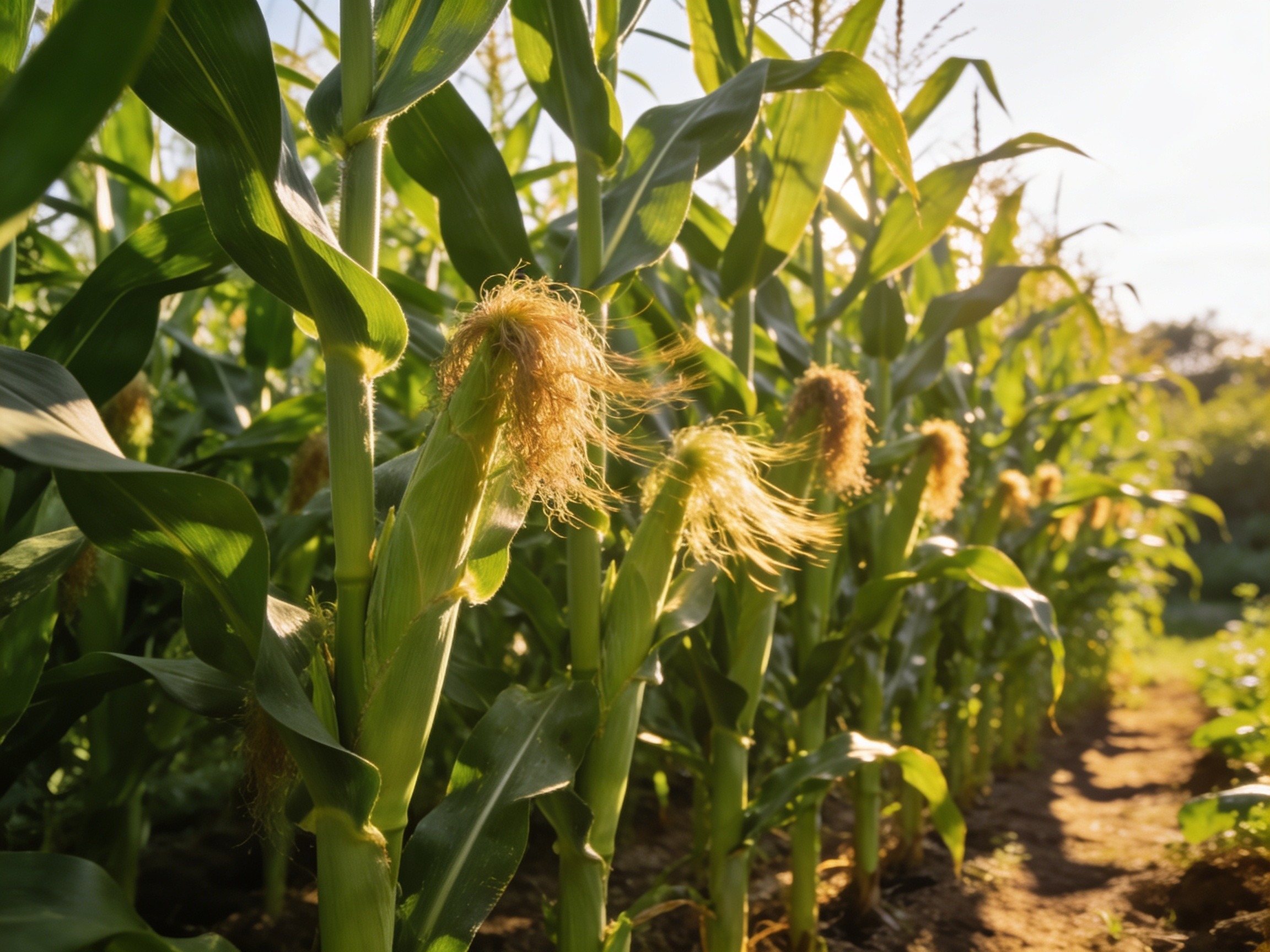
Corn wants full sun, rich soil, and consistent moisture, especially once it starts tasseling and forming ears. Plant it in blocks of at least four rows rather than a single long row to ensure good wind pollination and full, well-filled ears.
Corn is a heavy nitrogen feeder, so side-dressing with a nitrogen-rich fertilizer once plants reach knee-height typically improves both stalk growth and ear size.