Cactus flowers are a surprising, often fleeting reward from plants otherwise known for their spines and stark, sculptural forms — many bloom for just a single day or night each year.
Native primarily to the Americas, cacti have adapted to extreme drought and heat, storing water in thick, fleshy stems. Their brief but spectacular blooms, often large, waxy, and vividly colored, are a highlight for desert gardeners each spring or summer.
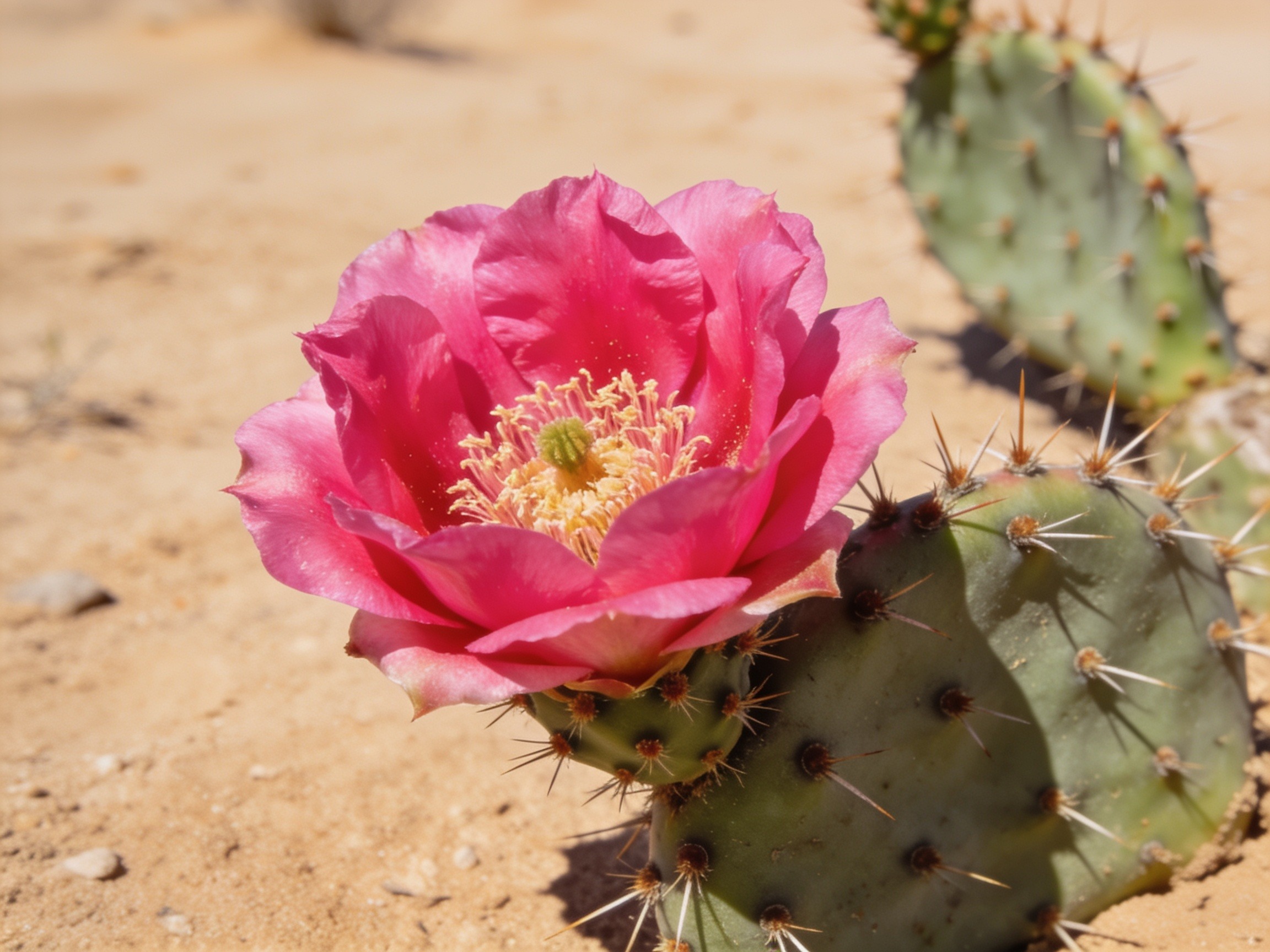
Cactus flowers symbolize endurance and hidden beauty, a fitting meaning for a bloom that emerges briefly from a plant otherwise defined by its tough, protective spines.
Cacti need full sun and extremely well-draining, gritty soil — overwatering is by far the most common way these plants are lost. Most species need very little supplemental water once established and are best left alone during their dormant winter period, when watering should be reduced significantly.
Certain cactus species, like prickly pear, have a long history of traditional use for wound care and managing blood sugar, and the pads and fruit remain popular food items in Mexican and Southwestern cuisine today.