Blossom-End Rot
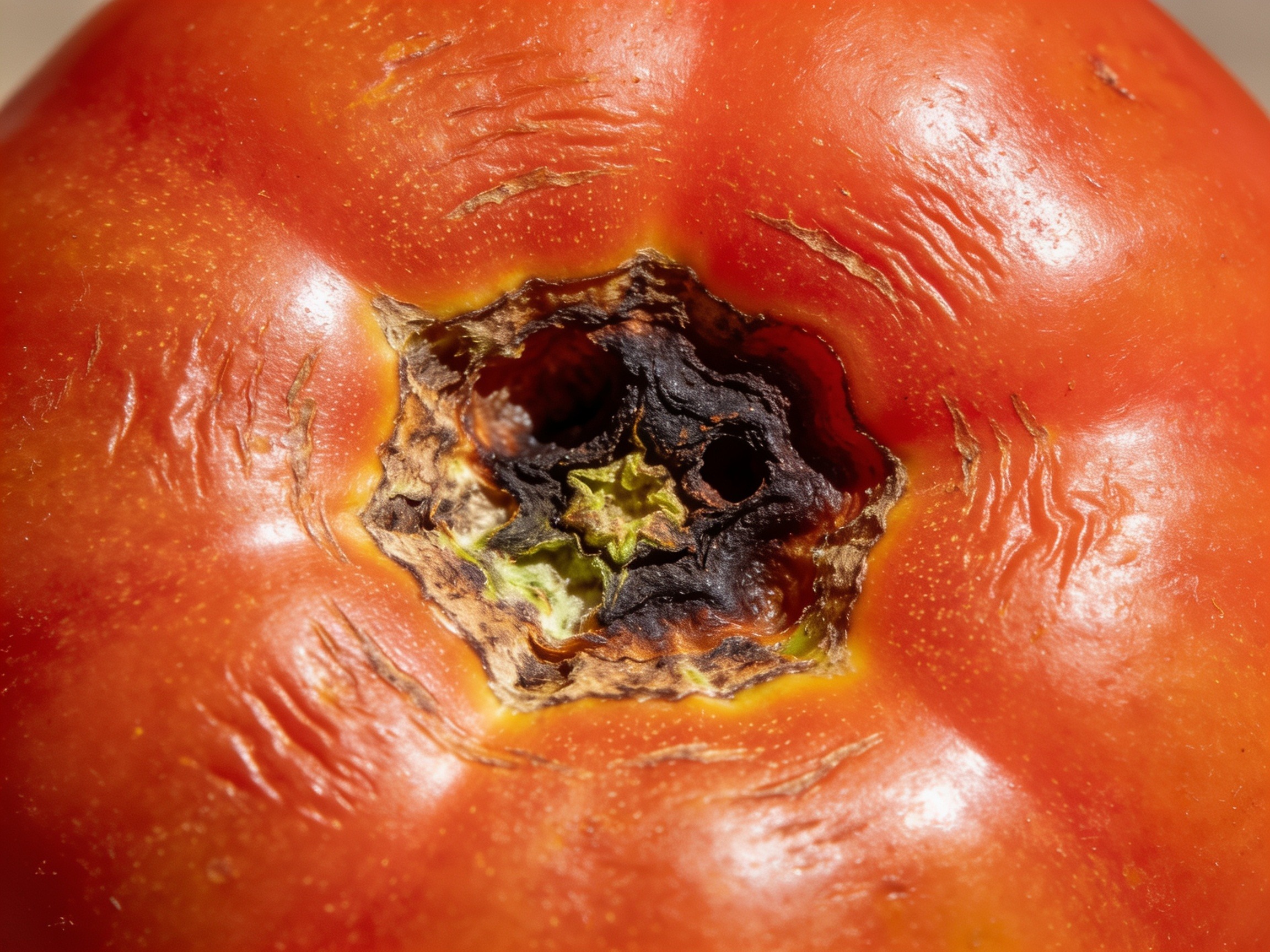
Blossom-end rot shows up as a dark, sunken, leathery patch on the bottom of tomatoes, peppers, and squash — and despite looking like a disease, it's actually a calcium delivery problem, not an infection.
Why It Happens
Blossom-end rot occurs when a developing fruit can't get enough calcium, most often because inconsistent watering disrupts the plant's ability to move calcium through its tissue — not necessarily because the soil itself lacks calcium. Irregular watering, drought stress, and rapid growth spurts after a dry spell are the most common triggers.
Because it's a physiological issue rather than a fungus or bacteria, no spray actually "cures" existing blossom-end rot — the affected fruit is a loss, but the next fruit set can be protected.
Consistent, even watering — not necessarily more watering — is the single most effective fix, since it keeps calcium moving steadily to developing fruit.
Preventing It Going Forward
A consistent watering schedule, a thick layer of mulch to even out soil moisture, and avoiding excess nitrogen fertilizer (which can push growth faster than calcium can keep up) all help prevent future fruit from developing the problem.