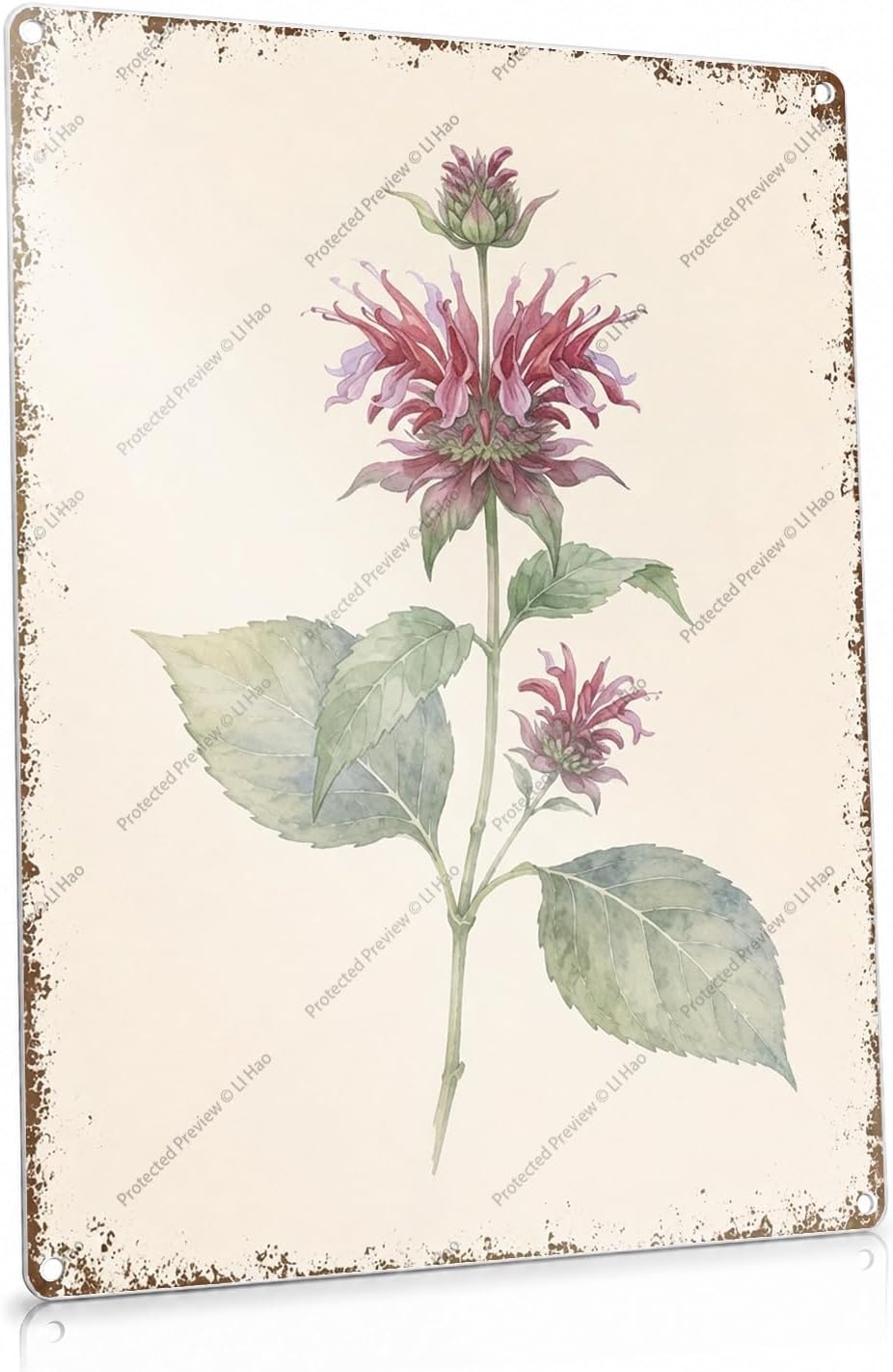
Bee balm produces shaggy, fireworks-like flower heads that live up to their name, drawing bees, hummingbirds, and butterflies to the garden all summer long.
Native to North America, bee balm belongs to the mint family and shares that family's aromatic, slightly spicy foliage scent. Its common name, Oswego tea, comes from Native American use of the leaves for tea, a tradition early American colonists adopted as well.
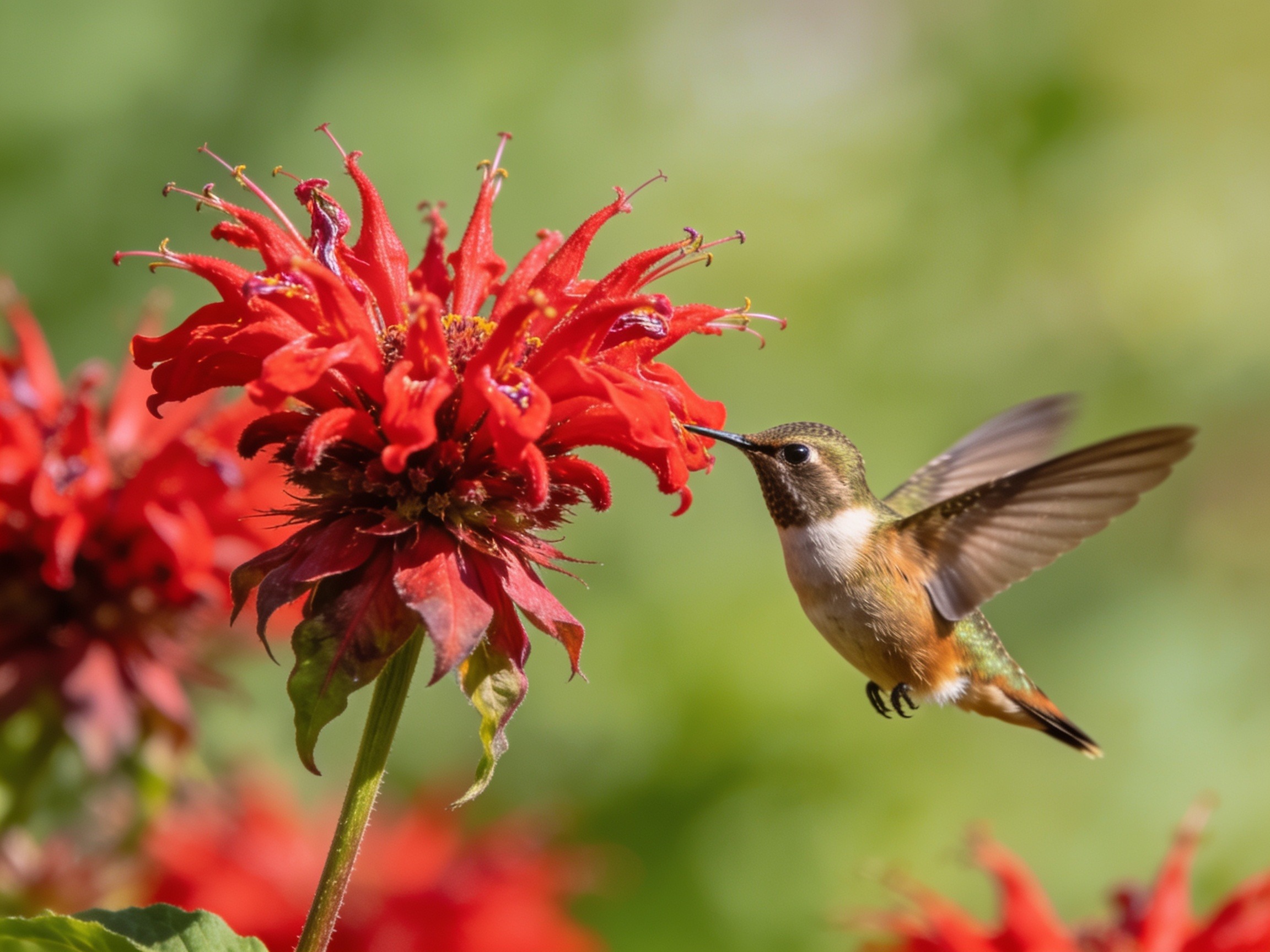
Bee balm symbolizes sweet virtue and compassion, and its historic role as a soothing herbal tea has reinforced its association with comfort and care.
Bee balm prefers full sun and consistently moist, well-draining soil, and good air circulation is essential, since the plant is prone to powdery mildew in crowded or stagnant conditions. Dividing clumps every few years both controls its spreading habit and helps prevent this common fungal issue.
Bee balm leaves have long been brewed into Oswego tea, valued in Native American and early colonial herbal traditions for soothing sore throats and aiding digestion, and the plant contains thymol, the same antiseptic compound found in thyme.