Bay Leaf
Bay leaf comes from the bay laurel tree (Laurus nobilis), a slow-growing Mediterranean evergreen prized since antiquity — victorious athletes and poets in ancient Greece were crowned with its branches, which is where we get the word "laureate." The leathery, aromatic leaves release a subtle, herbal bitterness that deepens slow-cooked dishes.
Growing Bay Laurel
Bay laurel is hardy only to about 15°F, so gardeners in cooler climates typically grow it in a pot that can be brought indoors for winter, kept pruned to a manageable size. It's an unhurried grower, tolerant of both drought and occasional neglect once established, and responds well to shaping — many are trained into the classic clipped "bay ball" or standard form.
Culinary Uses
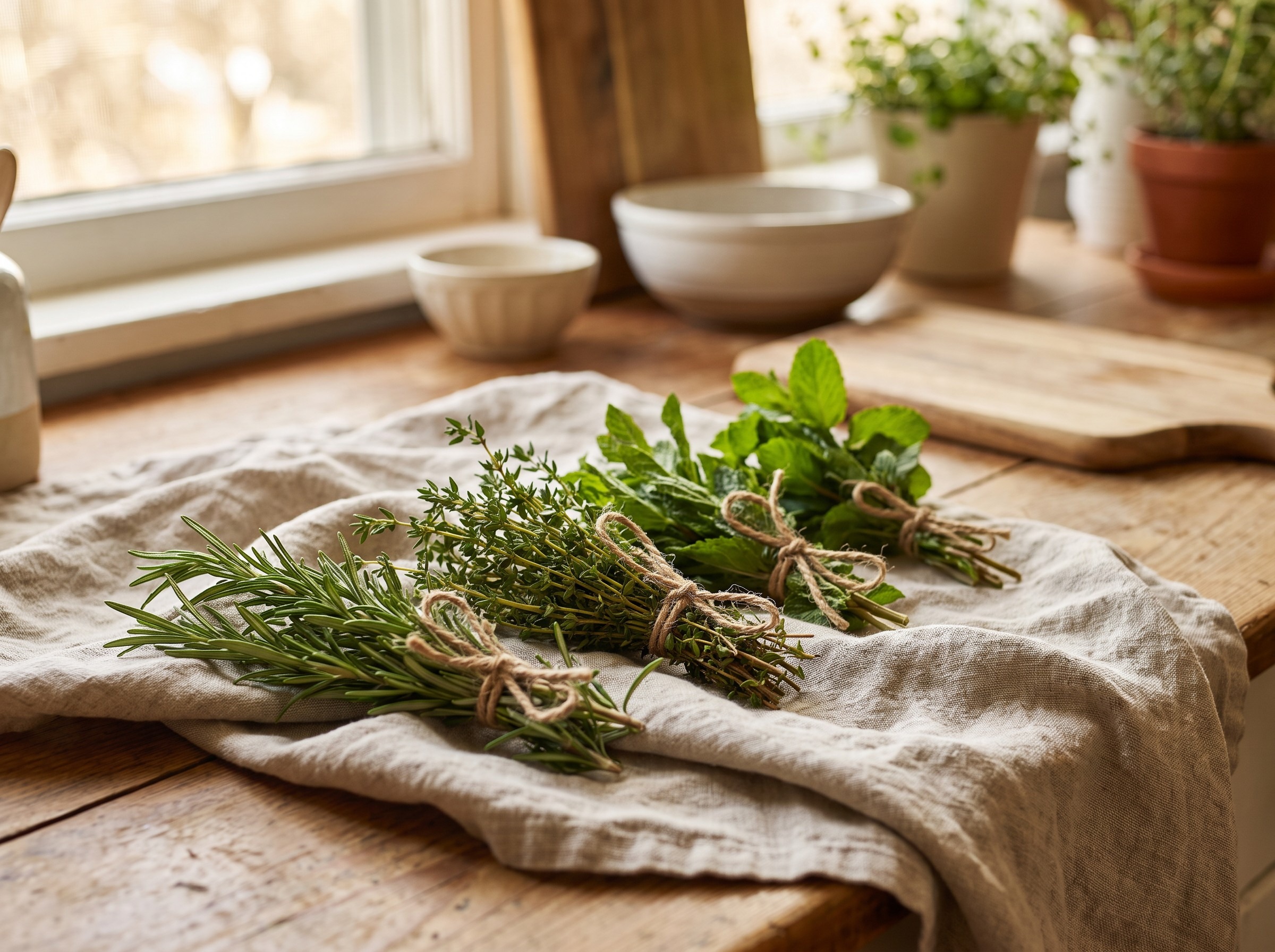
Whole bay leaves are simmered — never eaten whole — in soups, stews, braises, and sauces, then fished out before serving. Fresh leaves have a sharper, almost menthol edge, while dried leaves mellow into a rounder, more subtle bitterness over time. A leaf or two is usually plenty; bay's job is to build background depth, not to announce itself.
Caution: Bay leaves stay stiff and sharp-edged even after long cooking and can be a choking or puncture hazard if swallowed — always remove them from a dish before serving.