Baptisia, commonly called false indigo, sends up bold, upright spikes of pea-like blue, purple, white, or yellow flowers above blue-green foliage, followed by decorative black seed pods that rattle in the fall breeze.
A North American prairie native, Baptisia is exceptionally long-lived once its deep taproot establishes, forming a substantial, shrub-like clump that can anchor a perennial border for decades with almost no maintenance.
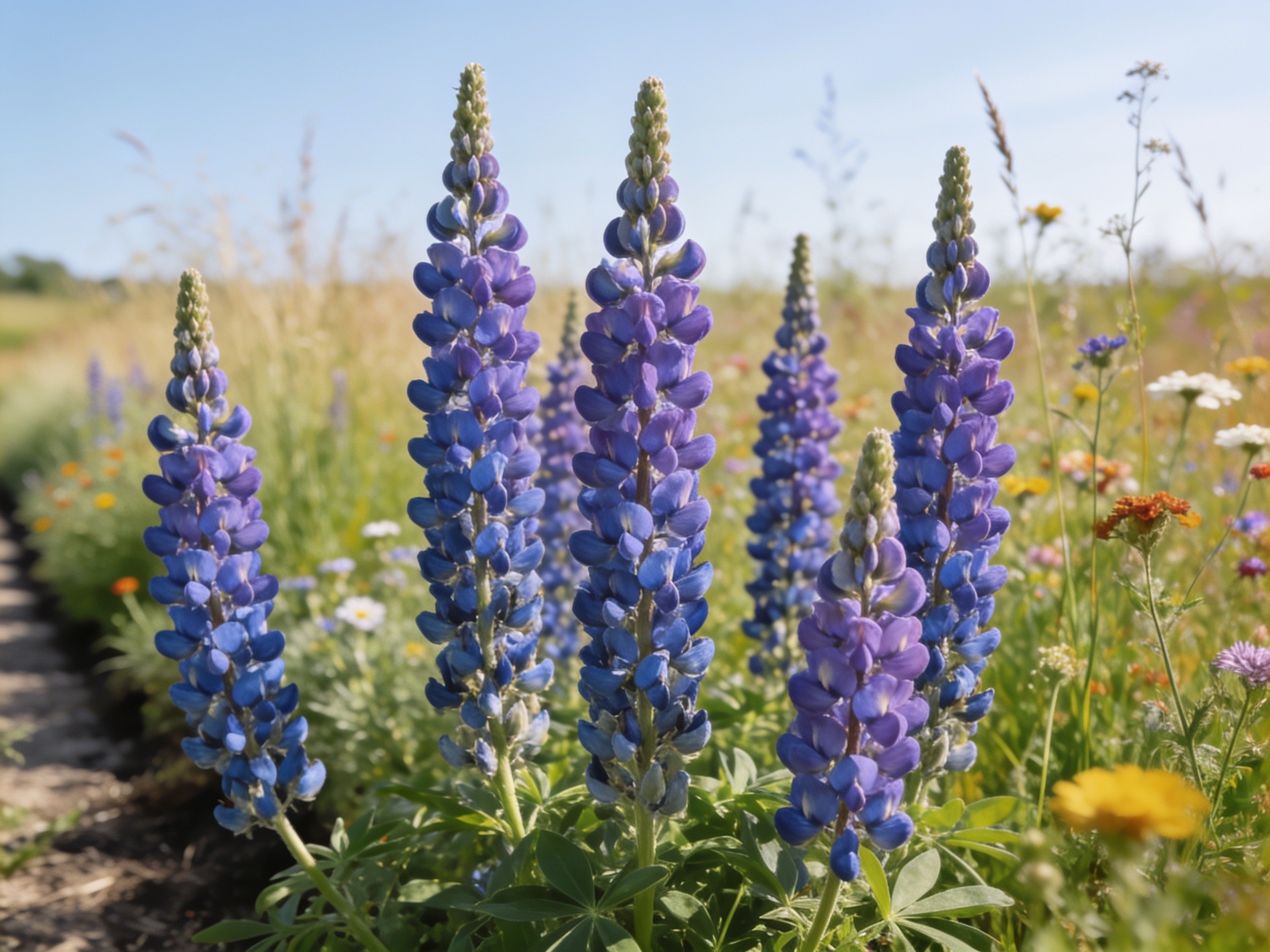
False indigo has come to symbolize resilience and steadfastness, fitting for a prairie native that can withstand drought, poor soil, and decades of neglect while still returning reliably each spring.
Plant Baptisia in full sun and well-drained soil; it tolerates poor, sandy, or clay soils once its deep taproot is established, but resents being divided or transplanted after its first year or two. Give it plenty of room, as mature clumps can reach three to four feet wide, and simply leave it be — this is a "plant it and forget it" perennial.
Native American tribes historically used Baptisia root in small preparations for wound care, and the plant's blue-tinted sap was sometimes used as a substitute dye for true indigo, though it yields a less colorfast result.